

Readings & Recordings
A small but growing collection of books, audio and video recordings that, to one degree or another, focus on core aspects of the perennial wisdom. From mystics, sages, seers and masters to philosophers, mycologists, and alternative healers, the goal here is the same: to expand awareness of the perennial wisdom and how it can help people overcome suffering and discover their true nature.
Readings & Recordings
A small but growing collection of books, audio and video recordings that, to one degree or another, focus on core aspects of the perennial wisdom. From mystics, sages, seers and masters to philosophers, mycologists, and alternative healers, the goal here is the same: to expand awareness of the perennial wisdom and how it can help people overcome suffering and discover their true nature.
Readings
Rather than a systematic theological treatise, the Al-Hikam is a collection of Sufi aphorisms penned by Ibn ʿAṭāʾ Allāh al-Iskandarī that are designed to challenge the ego and support the seeker’s quest to know God. Similar to other perennial way teachers, these sayings are often paradoxical, contradictory and speak directly to the seeker’s experiential search (versus more esoteric teachings). Some of the Hikam’s most prominent themes include:
-
Trusting in God rather than relying on one’s own efforts.
-
Recognizing the subtle role of the ego even in so-called ‘good’ deeds.
-
Seeing trials and suffering as divine gifts designed to strip away illusions.
-
Understanding that closeness to God is not about external acts alone but about inner purification and surrender.
The Hikam is considered important to seekers because it offers:
-
Accessible wisdom – The aphorisms are brief and memorable, making them easy to carry in the heart and meditate upon.
-
Correcting illusions – They help seekers distinguish between true reliance on God and subtle forms of egoism disguised as piety or spiritual progress.
-
Direct pointing – Like Zen koans or mystical poetry, the Ḥikam seeks to break the reader’s attachment to worldly causes and awaken direct awareness of God’s presence.
-
Living tradition – For centuries, Sufi teachers have used the Ḥikam as a training manual for disciples. Commentaries by great scholars (e.g., Ibn ʿAbbād of Ronda, Aḥmad Zarrūq) show how it has remained central to spiritual education.
-
Universal relevance – Although deeply rooted in Islamic spirituality, its wisdom often resonates with seekers of all backgrounds who are grappling with self, surrender, and the mystery of divine nearness.
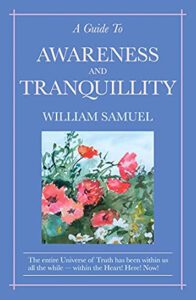 William Samuel kicks off his book, Awareness and Tranquility, with this teaser: “Reader, I have discovered a peace of mind and tranquility that are utterly beyond belief – and with the discovery has come the ability to communicate it to others.” Which is precisely what he does in this and other books, detailing the profound inner transformation available to all who want it.
As with other perennial way teachers, Samuel emphasizes the importance of direct awareness of one’s own true nature – a state of presence he identifies with Awareness itself and tranquility as its effortless, natural expression.
Key themes in the book include:
Identity-as-Awareness: Samuel teaches that what we really are is pure awareness (consciousness itself), not the ego or personal self. In his view, this Awareness is timeless, unchanging, and identical with the divine.
Tranquility as our essential nature: True peace is not a temporary state to be achieved, but the ground of being itself – ever present beneath mental turmoil and life’s changing circumstances.
Transcending duality: The book encourages seeing beyond common subject-object or self-world distinctions, pointing toward a nondual realization in which all experience simply is Awareness.
Practical insight over doctrine: Samuel’s writing is often described as plainspoken and experiential, focusing on what can be realized rather than intellectually analyzed.
 Meaning ‘Song of the Lord,’ the Bhagavad Gita is a 700-verse spiritual dialogue embedded in the Indian epic, Mahābhārata. On the battlefield of Kurukshetra, the warrior Arjuna is overcome by moral crisis. His charioteer, Krishna, reveals profound teachings on reality, selfhood, action, devotion, and liberation.
The Bhagavad Gita is intended as a universal manual for inner awakening while still living fully in the world. Core teachings include:
- The true Self (Ātman) – you are no the body, personality or the mind but are, instead, the witnessing Self. Liberation from being a separated ego comes through direct insight rather than belief alone.
- Action without attachment (Karma Yoga) – one is advised to act wholeheartedly in order to release the fruits. This purifies the ego and dissolves anxiety as one withdraws from life.
- Devotion and surrender (Bhakti Yoga) – Committing oneself and surrendering to the Absolute, often embodied in a living guru. The grace of God is received as the sense of doership relaxes.
- Knowledge and discernment (Jñāna Yoga) – Using the existing mind / intellect to discriminate between the real and impermanent / transient. Suffering occurs when we attach to the impermanent.
- Integration, not escape – Awakening / liberation occurs not when we escape to monasteries, caves, or mountaintops but in the midst of daily activities, conflict, duty, relationships, etc.
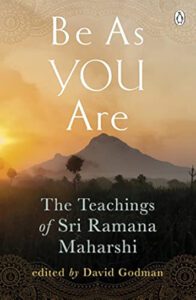 Ramana Maharshi received visitors from all over the world, and though he spent most of those visits in complete silence, his oral teachings were often jotted down by those in attendance.
David Godman (what a perfectly suited name) was one such early visitor who ultimately decided to stay put – even after Ramana’s death. As a result, Godman has become the world’s foremost scholar on Ramana’s teachings and has captured many of them beautifully in this gem of a book, Be As You Are.
“There is no realization to be achieved. The Self is already realized.”
Drawn primarily from dialogues recorded by his disciples, Be As You Are can be seen as a direct pointing manual, meaning it is designed to bring the reader back to their true nature through immediate inquiry rather than belief, ritual, or philosophy. In other words, it is a perfect embodiment of Ramana himself.
At its heart, the book revolves around one central question – Who / What am I? – and the practice intended to satisfy that question: self-inquiry.
But with a catch: if practiced correctly, the inquiry into ‘who am I?’ cannot, in fact, be answered. In other words, it’s not an intellectual question. Instead it’s meant to turn the mind in on itself and where, ostensibly, the self (the source of the I-thoughts) lives. What is discovered is that there is no I in there, no source, just a cacophony of thoughts, some random, many habitual, leading to the illusion there is ‘someone’ responsible.
Key aspects of the book include:
- The Self (Ātman / God) is ever-present: We don’t achieve liberation, we recognize we were never imprisoned by a false ego to begin with.
- Ego is a thought-construct: The “I am the body / mind” idea dissolves when examined.
- Silence is the highest teaching: Words only point; realization is prior to language.
- Grace and effort are not opposed: Persistent inquiry ripens into effortless being.
- Liberation is now: Not after death, not after purification, not after perfection.
What comes across is that Ramana was direct, uncompromising, and compassionate toward all who approached him for help. Rich or poor, arrogant or humble, all – including animals – were greeted by Ramana with warmth and infinite patience. Again and again he redirected seekers away from processes of the mind – including the spiritual search itself – and back toward awareness of awareness.
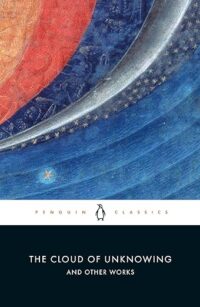 Penned at some point in the late 1300s by an unknown English mystic, The Cloud of Unknowing is a radical teaching that maintains we can only truly know God by loving surrender into unknowing. The text is written as if to a sincere seeker earnestly ready for contemplative prayer rather than theological or moral instruction. Its core insights include:
God is Known Through Love, Not Intellect
The mysterious author insisted that concepts, images, doctrines, and experiences – even mystical ones – cannot reach God (similar to Ramana, who urged his followers not to end their quest at even the most powerful experiences). Thought, writes the author, always falls short. “By love He may be gotten and holden; but by thought never.”
Two ‘Clouds’ Make Up the Inner Path
The author maintains a two-cloud path, as it were, beginning with the Cloud of Forgetting and then onto the Cloud of Unknowing. In the first, the seeker is tasked with gently letting go of everything that can be thought: memories, ideas, spiritual images and, of course, any concepts of God. What remains is the latter Cloud of Unknowing, a dark, silent openness where God is present but ultimately still unknowable. The seeker does not penetrate this cloud with effort but instead rests beneath it in naked intent.
A Single Word of Intention
The author recommends a strikingly simple but profound approach: choose a single word (love, God, peace, etc.) and focus on it not as a mantra but as a pointer to move beyond mind into stillness. This aligns with Zen, Advaita, and other modes of centered focus.
Ultimately, The Cloud of Unknowing aligns with other perennial wisdom teachings, which recommend unlearning (or forgetting) everything we’ve learned so that God may emerge and fill us with its Light. Think here of Advaita Vedanta’s neti, neti (not this, not that); the Christiain mysticism of Meister Eckhart, “God is a darkness beyond light”; Zen’s ‘Great Doubt’ where awakening occurs when the mind collapses; and Taoism’s “The Tak that can be spoken is not the eternal Taol.”
The Cloud of Unknowing teaches that the deepest truth is encountered not by thinking harder, but by loving surrender into a silence beyond thought – and this is exactly the heart of the perennial wisdom.
The Infinite Way represents Joel Goldsmith’s mystical path to spiritual awakening. Far from being a how to guide or a religious doctrine (Goldsmith was adamantly opposed to anyone treating him or his words as gospel), the Infinite Way is a collection of integrated essays illustrating the illusion that keeps us separated from the realization of our true Self. At its heart, the Infinite Way taught:
God as Infinite Consciousness
What we call God is not a distant being, a ‘Santa Claus in the sky,’ or a personal deity. Instead, the book teachers that God is infinite, omnipresent consciousness and all creation is an expression of that consciousness. The spiritual journey, therefore, is one of awakening to this truth: that the individual and the Infinite are One.
Your prayer will not be an asking or a seeking for any thing; it will be an asking and a seeking and a knocking for more light, greater spiritual wisdom, greater discernment.
Illusion of Material Sense
Echoing the nondual insight found in Advaita Vedanta and Christian mysticism, Goldsmith said the material world as perceived by the senses is a shadow of reality – a projection of the mind’s false belief in separation. True reality is spiritual, not material.
The Christ Within
Goldsmith saw Christ as the name for the divine Self within each being – the spiritual identity that transcends the human mind and ego. Experiencing the Christ within is awakening to the truth that ‘I and the Father are one.’
Inner Silence and Contemplation
As with all mystical teachings, Goldsmith saw silence as the most powerful and important form of meditation and prayer. But far from a passive form of quiet, Goldsmith’s Infinite Way taught we must listen for ‘the still small voice within’ to speak to us. Much like Brother Lawrence (see listing), Goldsmith’s Infinite Way taught that listening for God was tantamount to ‘practicing the presence of God.’ In silent, listening prayer, we allowed God’s presence and will to be revealed and known.
Grace, Not Personal Effort
The Infinite Way teaches that spiritual realization comes not from exercising personal willpower, moral goodness, or rites and rituals, but instead through the grace of God. This grace can only be received when the individual ego let’s go and surrenders its ill to God.
Oneness and Universal Love
When the individual receives God’s graces, compassion, forgiveness, and peace come with it. Far from the human concept of conditional love, this awakening brings with it a felt oneness with God / ultimate reality.
Goldsmith was a prolific writer. Among his best-known and most accessible books are: The Infinite Way, The Thunder of Silence, The Art of Meditation, Practicing the Presence, and The Art of Spiritual Healing.
Written in 1577, Teresa of Ávila’s Interior Castle is considered a masterpiece of Christian mysticism. At its core, the book serves as a kind of spiritual map leading toward a reunion (return to) with God. As with other great mystical teachings, the journey is described as one of surrender vs self (ego) effort. As one moves deeper, self-centeredness fades and love for God becomes the soul’s entire orientation.Teresa imagined God at the center of a castle made of diamonds or crystals filled with many rooms (aka ‘many mansions’), radiating light to help guide the souls seeking it. for the souls seeking It. The seven mansions or stages of spiritual growth are:
- Awakening: Distracted by worldly concerns, the soul nevertheless begins to turn toward God.
- Growth in Discipline: Still struggling with earthly (material) temptations, the soul begins to pray and meditate more faithfully.
- Active Virtue: While the seeker settles into a devout, disciplined life, the love of God has yet to become all-consuming.
- Beginning of Contemplation: As prayer becomes deeper and more supernatural, God begins to draw the soul inward in quiet love.
- Union of the Will: A kind of spiritual betrothal unfolds with God’s presence constant and intimate.
- Purification through Suffering: The soul undergoes trials, deep longing, and ecstatic encounters with God.
- Spiritual Marriage: Complete union with God, where the soul lives in continual awareness of divine love.
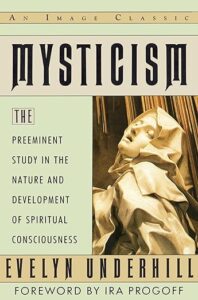 Written by Evelyn Underhill in 1911, Mysticism is widely considered one of the earliest and most influential modern studies of mystical-based spirituality. Rather than focusing on the mystical antecedents of a single religious doctrine, Underhill approached mysticism as a universal capacity for direct experience of Ultimate Reality – what she called The Real (God).
Key aspects of the book include:
Core Thesis of Mysticism
In a world where the term ‘mysticism’ often conjures thoughts of fantasy or emotionalism, Underhill instead maintained that true mysticism represents “the art of union with Reality.” From Underhill’s perspective, mysticism is:
- Experiential versus intellectual or moral
- Appears across cultures and religions
- Follows recognizable psychological and spiritual patterns
- Culminates in transformation of consciousness and character
“The mystic is a person who has attained that union with Reality which is the ultimate object of all spiritual effort.”
The Five Stages of the Mystical Path
Underhill’s most famous contribution is her five-stage model, distilled from centuries of mystical literature and articulated as:
1. Awakening: Sudden or gradual awareness that ordinary life is not ultimate; a strong sense that there is more than the visible world. This stage often is accompanied by wonder, longing, and disorientation.
2. Purgation: A time of ethical and psychological purification during which the seeker surrenders ego attachments, compulsions, and illusory beliefs in the material world and its supposed benefits, demands, etc.
3. Illumination: The individual experiences a sense of unity, beauty, joy and insight. The world appears luminous and alive with God intimately and immanently present.
4. The Dark Night of the Soul: It is here that the spiritual consolations and gifts of the early journey abruptly dry up – prayers feel mechanical, meditation impossible, and a sense of hopelessness may pervade. Far from being seen as a point of failure, Underhill explains this as the final letting go, where the early baubles of the spiritual journey are surrendered so that a complete awakening is made possible. Worth noting that John of the Cross describes this period where God withdraws the light so that the soul may learn to walk by faith rather than sight.
5. Unitive Life: At this final stage the supplicant experiences a stable union with Reality (the Real aka God). Here ordinary life becomes sacramental and compassion, humility, and service to others flow naturally (i.e., no longer conditional constructs of a now-dissolved ego).
Ultimately, Underhill saw mysticism not as escape or withdrawal from life but instead an inner transformation that breathes a new and more meaningful approach to all existence.
Using the Heart Sutra as its backbone, The Open Secret employs a collection of essays, poetry, dialogs, and epigrams to tackle the human mind, self, space-time, illusion, and other metaphysical musings through the lens of Zen Buddhism.
Huxley is often credited – correctly or not – with coining the term perennial philosophy (or wisdom) and its definition. An ardent student of mysticism around the world, Huxley recognized that at the root of virtually all these traditions was the idea of a single, ineffable Reality. He demonstrated that, far from being cultural accidents, the insights behind these traditions actually constitute perennial truths.
Key components of his work, all of them more or less encapsulated in his book, The Perennial Philosophy: An Interpretation of the Great Mystics, East and West, include:
- All authentic spiritual and religious traditions have at their root the same direct knowledge of Ultimate Reality.
- All existence arises from and is sustained by a single, ineffable Reality.
- Ego is the primary obstacle to this Truth
- This Truth can only be experienced directly, not through thinking, dogma, or blind faith
- Morality arises as a consequence of this knowing, not as a cause
David Carse penned the miracle that is Perfect Brilliant Stillness after his profound spiritual awakening in the Amazon. This book is the best I’ve read on what it means to discover ‘there’s nobody home’ and that the self is pure awareness itself. Carse is a terrific writer and does his best to articulate what cannot be articulated. For a real treat, purchase a copy of the audio version narrated by the late Terrence Stamp. I’ve listened to it multiple times and always come away with something new and revealing.
Widely considered the earliest surviving English-language book written by a woman, Julian Norwich’s Revelations of Divine Love was a recounting of the 16 divine revelations she experienced during what she imagined was a fatal illness. The visions revealed deep insights into the nature of God, creation, sin and redemption.
—
## **Julian of Norwich’s Sixteen Showings**
*(based on the long text’s expanded theological reflections)*
### **1. Christ’s Crown of Thorns**
* **What she saw:** The bleeding head of Christ crowned with sharp thorns, blood running down like rain.
* **Meaning:** The crown represents both Christ’s suffering and His victory. It’s a sign of His unfathomable love and willingness to bear pain for humanity’s sake.
—
### **2. Christ’s Face in Passion**
* **What she saw:** Christ’s battered, bleeding face — pale, weak, yet full of love.
* **Meaning:** His suffering is not forced, but freely chosen. The ugliness of the wounds contrasts with the beauty of His love, showing the cost of redemption.
—
### **3. God’s Full Reign and Providence**
* **What she saw:** God enthroned in majesty, holding the whole world — as small as a hazelnut — in His hand.
* **Meaning:** All that exists is preserved by God’s love. She hears that God made it, loves it, and keeps it, and that without His love it would vanish.
—
### **4. Christ’s Bleeding Body**
* **What she saw:** Christ’s body, torn and bleeding, the blood flowing freely and abundantly.
* **Meaning:** The flowing blood is life-giving — not a sign of defeat, but of God’s generosity. His suffering is a wellspring of healing.
—
### **5. The Passion’s Joy**
* **What she saw:** Despite the agony, Christ’s love was steadfast and joyful in purpose.
* **Meaning:** The Passion is an act of deep joy for Christ, because through it He brings His beloved creation back into union with God.
—
### **6. Mary’s Role**
* **What she saw:** Mary at the foot of the cross, steadfast and serene.
* **Meaning:** Mary is the model of faith — one who accepts God’s will fully, even without knowing how everything will be resolved.
—
### **7. Christ’s Death**
* **What she saw:** The moment Christ dies — darkness, stillness, and silence.
* **Meaning:** His death is the culmination of love; the stillness after is a holy pause before the triumph of resurrection.
—
### **8. The Trinity**
* **What she saw:** A vision of the Trinity — Father, Son, and Holy Spirit — perfectly united in love.
* **Meaning:** God’s essence is love shared in mutuality, and this love is the foundation of all creation.
—
### **9. The Soul’s Union with God**
* **What she saw:** The soul, kept safe in God, like something treasured and protected.
* **Meaning:** God never leaves the soul — even in sin or suffering, the soul remains rooted in divine love.
—
### **10. God’s Pleasure in Creation**
* **What she saw:** God delighting in His creation as a joyful parent delights in a child.
* **Meaning:** God’s relationship to us is tender, intimate, and delight-filled, not distant or wrathful.
—
### **11. Sin and Its Purpose (“Sin is behovely”)**
* **What she saw:** Humanity’s sin — but also God’s promise to make all things well.
* **Meaning:** “Sin is behovely” means that while sin is not good, it plays a necessary role in the unfolding story of redemption, because it leads to humility and the knowledge of God’s mercy.
—
### **12. God’s Assurance: “All shall be well”**
* **What she saw:** A divine promise that in the end, every wrong will be made right.
* **Meaning:** Even the worst of evils will be overcome by God’s goodness — though the “how” is hidden from us now.
—
### **13. Christ as Our Mother**
* **What she saw:** Christ as a nurturing mother who feeds us with His body and blood.
* **Meaning:** This maternal imagery expresses God’s tender care, patience, and intimate involvement in our spiritual growth.
—
### **14. The Church and the Communion of Saints**
* **What she saw:** The whole community of believers — past, present, and future — united in God’s love.
* **Meaning:** Our salvation is communal as well as individual; God gathers us all together in one love.
—
### **15. Longing for Heaven**
* **What she saw:** Her soul’s intense desire to be with God fully.
* **Meaning:** This longing is planted by God, and the fulfillment of it will bring unending joy.
—
### **16. Final Assurance of God’s Love**
* **What she saw:** All the visions knit together in one overwhelming sense of God’s eternal, unchangeable love.
* **Meaning:** God is our beginning and our end, and His love never fails. The whole point of creation is this mutual love between God and the soul.
—
If you’d like, I can also make you a **single-page visual chart** showing each vision’s imagery, theological meaning, and related quotes from Julian — it’s a really handy way to see the progression from Christ’s Passion to her sweeping vision of divine love. Would you like me to prepare that?
A classic Taoist meditation guide focused on the transformation of consciousness through disciplined inward attention, The Secret of the Golden Flower is both practical and symbolic, describing how awakening unfolds from within rather than being achieved through external effort.
At its core, the book focuses on:
- Enlightenment is not attained – it ripens naturally when attention turns inward and stabilizes.
- Circulation of the Light (awareness or consciousness) – gently and consistently turning awareness back in on itself.
- Inner Alchemy (Neidan) – turning the attention inward rather than on the outside world.
- Wu Wei (Non-Forcing) – spiritual practice unfolds through relaxed discipline versus ardent, forced trying. The book warns that ‘trying to awaken’ is a surefire path to blocking awakening.
- The Immortal Embryo – formation of an immortal embryo likened to a stable, non-reactive awareness that no longer identifies with thought or emotion
Robert Adams never wrote any books. But fortunately for us, students recorded many of his talks and then transcribed them into a collection titled, Silence of the Heart. This was the book that introduced me to the concept of Advaita Vedanta and quite literally changed the source of my spiritual journey forever.
Alernatively spelled as Dao De Jing,The Tao Te Ching is one of the foundational texts of Taoism (Daoism). Traditionally attributed to Laozi, the work is believed to have been composed sometime between the 6th–4th century BCE. Although short – composed of just 81 poetic verses – the book packs a metaphysical punch far beyond its weight. Centuries later, it remains one of the most translated and quoted spiritual / philosophical texts in human history.
At its core, the Tao Te Ching is considered less a philosophy and more a manual for living in harmony with Reality itself. Broken down, it equates to: Tao (Dao) → The Way: the ineffable source, process, and order of all things + Te → Virtue / Power: the natural expression of the Tao when lived rightly + Ching → a foundational reference, scripture – something to be returned to again and again.
Right out of the gate, the book hits the reader between the eyes with a dazzling paradox: “The Tao (Way) that can be spoken is not the eternal Tao.” From there it dives into:
- The Tao as the Ground of Being – prior to all distinctions, nameless, formless, ineffable; the source from which all phenomena arise (what, in the West, would be called ‘God’
- Wu Wei — Effortless Action – going with the flow and without egoic strain (effort, strain strengthens the ego)
- Humility, Softness, and Reversal – stress that softness overcomes hardness, humility bests dominance, yielding prevails over force
- Ego Dissolution – the sage does not assert, cling, or compete in the world
Considered one of humankind’s most profound and foundational spiritual texts, the Upanishads were composed in India between roughly 800–300 BCE and represent the philosophical culmination of the Vedas, the oldest sacred scriptures of Hinduism. The word Upanishad means to ‘sit near,’ as would a spiritual aspirant sitting close to a teacher to receive spiritual wisdom.
Unlike the narrative streams of more traditional scriptures, the Upanishads are a collection of mystical dialogues, meditations, and revelations that explore the nature of reality, God (Atman), and the underlying principle of existence (Brahman). For most, the Upanishads mark the transition from the rituals, rites, and dogmas of convention religion to inner God realization. Central to the Upanishads are principles including:
Brahman as Ultimate Reality
Underlying the transient, temporal world of form lies Brahman, the infinite, eternal, ineffable reality that is both the source and substance of all that exists.
Ātman the Inner Self
At the heart of every being is Ātman or God, which could be likened to pure consciousness, the innermost Self beyond mind, body, and personality.
He who sees all beings in his Self and his Self in all beings, he never suffers; because when he sees all creatures within his true Self, then jealousy, grief and hatred vanish.
Unity of Ātman and Brahman
The supreme insight of the Upanishads is the nonduality (Advaita) of the individual Self and the Universal Self. “I am Brahman” or, in Chrisian doctrine, “I am that” or “I and the Father are One” or “Be still and no I am God.” This revelation eliminates the idea of separateness and replaces it with the knowledge that all beings are expressions of manifestations of the One True Self.
Maya and Ignorance (Avidya)
The Upanishads maintain that all human suffering arises from avidya or ignorance (avidya), in which we mistake the temporal world of effect as reality and the ego as a separate, independent entity. As such, the spiritual journey leads the imagined entity from illusion (maya) to an awakened state of liberation (moksha).
Self-Realization Through Inner Knowing
Moksha is achieved not through outward rites and rituals but instead through deep self-inquiry, meditation, and experience of one’s true nature.
A good resource for learning more about the Upanishads is a book of the same name, The Upanishads and The Upanishads: Breath from the Eternal.
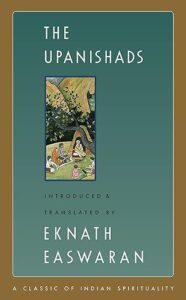 Considered one of humankind’s most profound and foundational spiritual texts, the Upanishads were composed in India between roughly 800–300 BCE and represent the philosophical culmination of the Vedas, the oldest sacred scriptures of Hinduism. The word Upanishad means to ‘sit near,’ as would a spiritual aspirant sitting close to a teacher to receive spiritual wisdom.
Unlike the narrative streams of more traditional scriptures, the Upanishads are a collection of mystical dialogues, meditations, and revelations that explore the nature of reality, God (Atman), and the underlying principle of existence (Brahman). For most, the Upanishads mark the transition from the rituals, rites, and dogmas of convention religion to inner God realization. Central to the Upanishads are principles including:
Brahman as Ultimate Reality
Underlying the transient, temporal world of form lies Brahman, the infinite, eternal, ineffable reality that is both the source and substance of all that exists.
Ātman the Inner Self
At the heart of every being is Ātman or God, which could be likened to pure consciousness, the innermost Self beyond mind, body, and personality.
He who sees all beings in his Self and his Self in all beings, he never suffers; because when he sees all creatures within his true Self, then jealousy, grief and hatred vanish.
Unity of Ātman and Brahman
The supreme insight of the Upanishads is the nonduality (Advaita) of the individual Self and the Universal Self. “I am Brahman” or, in Chrisian doctrine, “I am that” or “I and the Father are One” or “Be still and no I am God.” This revelation eliminates the idea of separateness and replaces it with the knowledge that all beings are expressions of manifestations of the One True Self.
Maya and Ignorance (Avidya)
The Upanishads maintain that all human suffering arises from avidya or ignorance (avidya), in which we mistake the temporal world of effect as reality and the ego as a separate, independent entity. As such, the spiritual journey leads the imagined entity from illusion (maya) to an awakened state of liberation (moksha).
Self-Realization Through Inner Knowing
Moksha is achieved not through outward rites and rituals but instead through deep self-inquiry, meditation, and experience of one’s true nature.
A good resource for learning more about the Upanishads is a book of the same name, The Upanishads and The Upanishads: Breath from the Eternal.
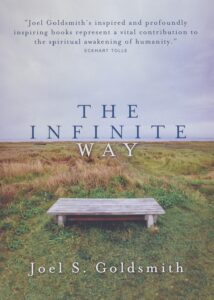 The Infinite Way represents Joel Goldsmith’s mystical path to spiritual awakening. Far from being a how to guide or a religious doctrine (Goldsmith was adamantly opposed to anyone treating him or his words as gospel), the Infinite Way is a collection of integrated essays illustrating the illusion that keeps us separated from the realization of our true Self. At its heart, the Infinite Way taught:
God as Infinite Consciousness
What we call God is not a distant being, a ‘Santa Claus in the sky,’ or a personal deity. Instead, the book teachers that God is infinite, omnipresent consciousness and all creation is an expression of that consciousness. The spiritual journey, therefore, is one of awakening to this truth: that the individual and the Infinite are One.
Your prayer will not be an asking or a seeking for any thing; it will be an asking and a seeking and a knocking for more light, greater spiritual wisdom, greater discernment.
Illusion of Material Sense
Echoing the nondual insight found in Advaita Vedanta and Christian mysticism, Goldsmith said the material world as perceived by the senses is a shadow of reality – a projection of the mind’s false belief in separation. True reality is spiritual, not material.
The Christ Within
Goldsmith saw Christ as the name for the divine Self within each being – the spiritual identity that transcends the human mind and ego. Experiencing the Christ within is awakening to the truth that ‘I and the Father are one.’
Inner Silence and Contemplation
As with all mystical teachings, Goldsmith saw silence as the most powerful and important form of meditation and prayer. But far from a passive form of quiet, Goldsmith’s Infinite Way taught we must listen for ‘the still small voice within’ to speak to us. Much like Brother Lawrence (see listing), Goldsmith’s Infinite Way taught that listening for God was tantamount to ‘practicing the presence of God.’ In silent, listening prayer, we allowed God’s presence and will to be revealed and known.
Grace, Not Personal Effort
The Infinite Way teaches that spiritual realization comes not from exercising personal willpower, moral goodness, or rites and rituals, but instead through the grace of God. This grace can only be received when the individual ego let’s go and surrenders its ill to God.
Oneness and Universal Love
When the individual receives God’s graces, compassion, forgiveness, and peace come with it. Far from the human concept of conditional love, this awakening brings with it a felt oneness with God / ultimate reality.
Goldsmith was a prolific writer. Among his best-known and most accessible books are: The Infinite Way, The Thunder of Silence, The Art of Meditation, Practicing the Presence, and The Art of Spiritual Healing.
Robert Adams never wrote any books. But fortunately for us, students recorded many of his talks and then transcribed them into a collection titled, Silence of the Heart. This was the book that introduced me to the concept of Advaita Vedanta and quite literally changed the source of my spiritual journey forever.
Rather than a systematic theological treatise, the Al-Hikam is a collection of Sufi aphorisms penned by Ibn ʿAṭāʾ Allāh al-Iskandarī that are designed to challenge the ego and support the seeker’s quest to know God. Similar to other perennial way teachers, these sayings are often paradoxical, contradictory and speak directly to the seeker’s experiential search (versus more esoteric teachings). Some of the Hikam’s most prominent themes include:
-
Trusting in God rather than relying on one’s own efforts.
-
Recognizing the subtle role of the ego even in so-called ‘good’ deeds.
-
Seeing trials and suffering as divine gifts designed to strip away illusions.
-
Understanding that closeness to God is not about external acts alone but about inner purification and surrender.
The Hikam is considered important to seekers because it offers:
-
Accessible wisdom – The aphorisms are brief and memorable, making them easy to carry in the heart and meditate upon.
-
Correcting illusions – They help seekers distinguish between true reliance on God and subtle forms of egoism disguised as piety or spiritual progress.
-
Direct pointing – Like Zen koans or mystical poetry, the Ḥikam seeks to break the reader’s attachment to worldly causes and awaken direct awareness of God’s presence.
-
Living tradition – For centuries, Sufi teachers have used the Ḥikam as a training manual for disciples. Commentaries by great scholars (e.g., Ibn ʿAbbād of Ronda, Aḥmad Zarrūq) show how it has remained central to spiritual education.
-
Universal relevance – Although deeply rooted in Islamic spirituality, its wisdom often resonates with seekers of all backgrounds who are grappling with self, surrender, and the mystery of divine nearness.
Ramana Maharshi received visitors from all over the world, and though he spent most of those visits in complete silence, his oral teachings were often jotted down by those in attendance. David Godman (what a perfectly suited name) was one such early visitor and opted – even in the wake of Ramana’s death – never to leave. He has become the world’s preeminent scholar on Ramana’s teachings and captured many of them beautifully in this little gem of a book, Be As You Are.
David Carse penned the miracle that is Perfect Brilliant Stillness after his profound spiritual awakening in the Amazon. This book is the best I’ve read on what it means to discover ‘there’s nobody home’ and that the self is pure awareness itself. Carse is a terrific writer and does his best to articulate what cannot be articulated. For a real treat, purchase a copy of the audio version narrated by the late Terrence Stamp. I’ve listened to it multiple times and always come away with something new and revealing.
Using the Heart Sutra as its backbone, The Open Secret employs a collection of essays, poetry, dialogs, and epigrams to tackle the human mind, self, space-time, illusion, and other metaphysical musings through the lens of Zen Buddhism.
William Samuel kicks off his book, Awareness and Tranquility, with this teaser: “Reader, I have discovered a peace of mind and tranquility that are utterly beyond belief – and with the discovery has come the ability to communicate it to others.” Which he does in this and other books, detailing the awareness and gentle presence at the core of all human beings awaiting our own discovery.
Written in 1577, Teresa of Ávila’s Interior Castle is considered a masterpiece of Christian mysticism. At its core, the book serves as a kind of spiritual map leading toward a reunion (return to) with God. As with other great mystical teachings, the journey is described as one of surrender vs self (ego) effort. As one moves deeper, self-centeredness fades and love for God becomes the soul’s entire orientation.Teresa imagined God at the center of a castle made of diamonds or crystals filled with many rooms (aka ‘many mansions’), radiating light to help guide the souls seeking it. for the souls seeking It. The seven mansions or stages of spiritual growth are:
- Awakening: Distracted by worldly concerns, the soul nevertheless begins to turn toward God.
- Growth in Discipline: Still struggling with earthly (material) temptations, the soul begins to pray and meditate more faithfully.
- Active Virtue: While the seeker settles into a devout, disciplined life, the love of God has yet to become all-consuming.
- Beginning of Contemplation: As prayer becomes deeper and more supernatural, God begins to draw the soul inward in quiet love.
- Union of the Will: A kind of spiritual betrothal unfolds with God’s presence constant and intimate.
- Purification through Suffering: The soul undergoes trials, deep longing, and ecstatic encounters with God.
- Spiritual Marriage: Complete union with God, where the soul lives in continual awareness of divine love.
Widely considered the earliest surviving English-language book written by a woman, Julian Norwich’s Revelations of Divine Love was a recounting of the 16 divine revelations she experienced during what she imagined was a fatal illness. The visions revealed deep insights into the nature of God, creation, sin and redemption.
—
## **Julian of Norwich’s Sixteen Showings**
*(based on the long text’s expanded theological reflections)*
### **1. Christ’s Crown of Thorns**
* **What she saw:** The bleeding head of Christ crowned with sharp thorns, blood running down like rain.
* **Meaning:** The crown represents both Christ’s suffering and His victory. It’s a sign of His unfathomable love and willingness to bear pain for humanity’s sake.
—
### **2. Christ’s Face in Passion**
* **What she saw:** Christ’s battered, bleeding face — pale, weak, yet full of love.
* **Meaning:** His suffering is not forced, but freely chosen. The ugliness of the wounds contrasts with the beauty of His love, showing the cost of redemption.
—
### **3. God’s Full Reign and Providence**
* **What she saw:** God enthroned in majesty, holding the whole world — as small as a hazelnut — in His hand.
* **Meaning:** All that exists is preserved by God’s love. She hears that God made it, loves it, and keeps it, and that without His love it would vanish.
—
### **4. Christ’s Bleeding Body**
* **What she saw:** Christ’s body, torn and bleeding, the blood flowing freely and abundantly.
* **Meaning:** The flowing blood is life-giving — not a sign of defeat, but of God’s generosity. His suffering is a wellspring of healing.
—
### **5. The Passion’s Joy**
* **What she saw:** Despite the agony, Christ’s love was steadfast and joyful in purpose.
* **Meaning:** The Passion is an act of deep joy for Christ, because through it He brings His beloved creation back into union with God.
—
### **6. Mary’s Role**
* **What she saw:** Mary at the foot of the cross, steadfast and serene.
* **Meaning:** Mary is the model of faith — one who accepts God’s will fully, even without knowing how everything will be resolved.
—
### **7. Christ’s Death**
* **What she saw:** The moment Christ dies — darkness, stillness, and silence.
* **Meaning:** His death is the culmination of love; the stillness after is a holy pause before the triumph of resurrection.
—
### **8. The Trinity**
* **What she saw:** A vision of the Trinity — Father, Son, and Holy Spirit — perfectly united in love.
* **Meaning:** God’s essence is love shared in mutuality, and this love is the foundation of all creation.
—
### **9. The Soul’s Union with God**
* **What she saw:** The soul, kept safe in God, like something treasured and protected.
* **Meaning:** God never leaves the soul — even in sin or suffering, the soul remains rooted in divine love.
—
### **10. God’s Pleasure in Creation**
* **What she saw:** God delighting in His creation as a joyful parent delights in a child.
* **Meaning:** God’s relationship to us is tender, intimate, and delight-filled, not distant or wrathful.
—
### **11. Sin and Its Purpose (“Sin is behovely”)**
* **What she saw:** Humanity’s sin — but also God’s promise to make all things well.
* **Meaning:** “Sin is behovely” means that while sin is not good, it plays a necessary role in the unfolding story of redemption, because it leads to humility and the knowledge of God’s mercy.
—
### **12. God’s Assurance: “All shall be well”**
* **What she saw:** A divine promise that in the end, every wrong will be made right.
* **Meaning:** Even the worst of evils will be overcome by God’s goodness — though the “how” is hidden from us now.
—
### **13. Christ as Our Mother**
* **What she saw:** Christ as a nurturing mother who feeds us with His body and blood.
* **Meaning:** This maternal imagery expresses God’s tender care, patience, and intimate involvement in our spiritual growth.
—
### **14. The Church and the Communion of Saints**
* **What she saw:** The whole community of believers — past, present, and future — united in God’s love.
* **Meaning:** Our salvation is communal as well as individual; God gathers us all together in one love.
—
### **15. Longing for Heaven**
* **What she saw:** Her soul’s intense desire to be with God fully.
* **Meaning:** This longing is planted by God, and the fulfillment of it will bring unending joy.
—
### **16. Final Assurance of God’s Love**
* **What she saw:** All the visions knit together in one overwhelming sense of God’s eternal, unchangeable love.
* **Meaning:** God is our beginning and our end, and His love never fails. The whole point of creation is this mutual love between God and the soul.
—
If you’d like, I can also make you a **single-page visual chart** showing each vision’s imagery, theological meaning, and related quotes from Julian — it’s a really handy way to see the progression from Christ’s Passion to her sweeping vision of divine love. Would you like me to prepare that?
Recordings
Subscribe for Updates
Complete the form below and I’ll email you with updates.
Subscribe for Updates
Complete the form below and I’ll email you with updates.