
“There is no other teacher but your own soul.”
Swami Vivekananda

Teachers of the Perennial Wisdom
A growing collection of masters, mystics, sages, philosophers, seers and a few researchers who, to one degree or another, have contributed to the body of work known as the perennial wisdom. These are listed in alphabetical order and readers are encouraged to trust their own inner voice when seeking the guidance or counsel of these individuals.
Teachers of the Perennial Wisdom
A growing collection of masters, mystics, sages, philosophers, seers and a few researchers who, to one degree or another, have contributed to the body of work known as the perennial wisdom. These are listed in alphabetical order and readers are encouraged to trust their own inner voice when seeking the guidance or counsel of these individuals.
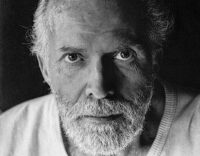 Born in New York City, at age 14 Adams experienced a complete spiritual awakening. Unable to process what happened to him, his parents dispatched him to see a local mystic, Joel Goldsmith (see his entry on this list), who after grasping the full extent of Adams’s awakening, sent him on a journey that ultimately would find him in an obscure corner of India to be mentored by Ramana Maharshi (see his entry on this list).
When Adams eventually returned to the U.S., he gave talks to Western audiences largely unfamiliar with the non-dual principles of Advaita Vedanta. Key aspects of Adams’s teachings included:
There is Only the Self (God)
As with other perennial wisdom teachers, Adams taught that everything – the universe, mind, body – is an appearance in pure, unconditioned awareness. He called this the Self and noted that all human suffering was caused by the mind, which necessarily creates labels and in those labels separation. We are not individuals, he said, we are awareness itself.
Silence is the Highest Teaching
Much like his spiritual mentor, Ramana, Adams said ultimate Truth could only be found in inner stillness and silence. His talks were often punctuated by long stretches of complete silence (Raman would often go days without speaking).
You are already free. Simply awaken to what you are.
Self-Inquiry
True to Advaita Vedanta, Adams said self-inquiry was the fastest and surest path to self-realization. By constantly and relentlessly inquiring into the thinker and thoughts, thoughts would gradually disappear of their own accord and the Self behind the imagined thinker would be revealed.
Compassion and Humility
Adams rejected the dogma of organized religion, Adams as with all perennial wisdom teachers maintained that there were Truths buried beneath that dogma that were important. In particular he urged his students to find compassion for all of life (love thy neighbor) and humility.
Although Adams never wrote any books, his students collected and printed some of his best-known talks in Silence of the Heart, a master class in Advaita Vedanta teachings.
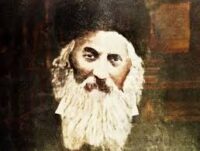 Meaning ‘Master of the Good Name,’ Baal Shem Tov was a Jewish mystic and healer in Eastern Europe who became the founder of Hasidism, one of the most influential spiritual movements in Judaism. Known for his wisdom, compassion, and reputed healing powers, he became a spiritual guide for ordinary Jews. Core themes in his teachings included:
God In All
The Baal Shem Tov emphasized that God is not distant but present in every aspect of creation. Even the simplest act, when done with awareness, can be a form of communion with God.
Joy and Love Over Fear
Before him, Jewish religious life for many was heavily focused on fear of sin and rigid observance. The Baal Shem Tov taught that serving God with joy, love, and enthusiasm was a higher path to divine closeness.
When you realize that God is everywhere and there’s nothing separating you from Him … all your fears and troubles will disappear.
Sincerity Over Scholarship
In an era when deep Talmudic study was considered the primary path to God, he taught that simple, heartfelt prayer from even an unlearned person could be more precious than scholarly brilliance if it was filled with sincerity.
Community and Compassion
He encouraged warmth, inclusiveness, and caring for others, which drew ordinary Jews into a sense of spiritual belonging. The Hasidic rebbe (teacher) became not just a scholar but a spiritual father, guiding people toward God in personal ways.
Access to the Mystical
He democratized aspects of Jewish mysticism (Kabbalah), showing that divine experience was not reserved for elites but open to every soul through prayer, music, storytelling, and awareness of God’s nearness.
Baal Shem Tov stands out as a teacher known for bringing the search for God down to the level of every day life. He reminded seeers that:
-
God can be encountered in ordinary acts done with love and awareness.
-
Spiritual life flourishes more through joy and sincerity than through fear and perfectionism.
-
Every soul, no matter how simple, has infinite value and capacity for intimacy with the Divine.
Good books on learning morning about The Baal Shem Tov include: The Light and Fire of the Baal Shem Tov, Baal Shem Tov Faith Love Joy: Mystical Stories of the Legendary Kabbalah Master, and Sayings Of The Baal Shem Tov – Kesser Shem Tov: Meditations Actions & Philosophy (Meditations Mysticism Meaning).
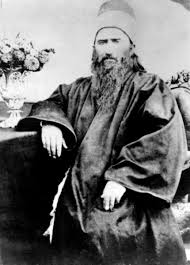 Founder of the Baháʼí faith, Baháʼu’lláh (a name that translates to ‘Glory of God’ in Arabic) was an Iranian mystic whose teachings emphasized the oneness of existence. As was the case with many other teachers of the perennial wisdom, Baháʼu’lláh landed in prison due to his challenges to existing religious and political orthodoxies.
Key tenets of Baháʼu’lláh’s teachings included:
Oneness of God
Similar to all perennial wisdom teachings, Baháʼu’lláh taught there is one all-encompassing reality and that across time and place this Truth was brought to humankind through divine messengers like himself.
Oneness of Religion
Along those same lines, Baháʼu’lláh stated there was only one true religion and that the birth of each new religion was merely an unfolding of that story.
The world of being hath never had, nor doth it now have, nor will it ever have, any being but God.
Oneness of Humanity
He maintained that the prejudices, divisions, judgments, and inequalities plaguing humankind were a form of spiritual disease that kept humans trapped in cycles of darkness, and that these errors could be healed through love.
Progressive Revelation
Baháʼu’lláh said that divine messengers like Jesus, Buddha, Moses, Krishna, etc., brought with them teachings that were appropriate for humanity’s state of spiritual maturity.
Inner Transformation, Outer Service
As with other perennial wisdom teachers, including Guru Nanak (see his listing), Baháʼu’lláh said spiritual realization can unfold through inner transformation as well as outer expressions of compassionate action and the building of a just, peaceful, loving world.
A good introduction to Baháʼu’lláh and the Baháʼí faith can be found in: Baha’u’llah and the New Era: An Introduction to the Baha’i Faith.
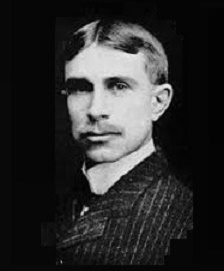 An American spiritual teacher and author best known for writing The Impersonal Life, Joseph Benner (1872–1938) deeply influenced many 20th-century seekers, including Elvis Presley, who is said to have carried the book with him everywhere. As the book’s title suggests, Benner’s writings were part of what he called ‘Impersonal Teaching,’ meaning a path of inner realization centered on awakening to the divine Self within – the I Am that is the true essence of every being.
As with many other wisdom teachers, Benner wrote in a direct, first-person, God-voice (aka “Be still and know I AM God”). This was intended to awaken the indwelling Christ within, not as a mental concept but as a living reality.
You are what you believe you are. Not one thing in your life is Real or has any value to you only as your thinking and believing has made it such.
Core aspects of Benner’s teachings that align with the perennial wisdom include:
The Ego as Instrument
As with all perennial wisdom teachers, Benner said the individual self or ego is not the true Self (aka the I Am). Instead, it is an instrument or vehicle through which divinity expresses itself.
I Am
Along those same lines, the I Am or God is the Impersonal Self – the only true being, eternally present within the all of existence. Nothing is separate from that except in the imagination of the ego.
Silence and Surrender
Lasting peace can only be found when the small self / ego surrenders its will to God. It is in silence that God can be heard and Its will be done.
The Outer is a Distraction
Benner saw all forms of outer striving, including intellectual seeking, religious dogma, and other outward-focused seeking as unnecessary distractions that lead one away from God. God is omnipresent and available when we put these outer efforts to rest and sit in the silence.
Humility and Trust
The path to God is characterized as one of stillness, humility and trust – letting the divine operate through us rather than trying to live or be of service to God. God does not need us to manage things, It wants only to operate through us where true joy, bliss, and peace await.
A collection of Benner’s works, including The Impersonal Life, can be found in The Joseph Benner Collection. The Impersonal Life, The Way Out, The Way Beyond, Wealth, The Teacher (Timeless Wisdom Collection).
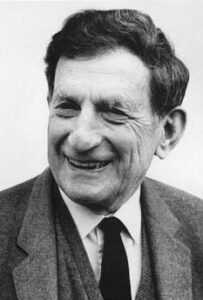 A pioneering theoretical physicist and philosopher, David Bohm (1917-1992) bridged quantum mechanics, consciousness, and the nature of reality. Although Bohm did not present himself as a spiritual teachers or report mystical experiences, his work nevertheless resonated with most of the works found in the perennial wisdom. Notably, Bohm’s work led him to believe in One, undivided, infinite intelligence. In fact, Bohm happily and constructively engaged in talks with J. Krishnamurti on topics exploring thought, awareness, consciousness, and wholeness.
Deep down the consciousness of mankind is one.
Core perennial insights emanating from Bohm’s work include:
Reality As Undivided Wholeness
As with a growing crop of modern quantum physicists, Bohm argued that what we perceive as separate objects, minds, and events are actually surface expressions of a much deeper, unified process. He explained this division as one of an implicate vs explicate order, meaning a deep, enfolded reality that contains everything (implicate order) expressing itself as external things such as particles, people, objects, thoughts (explicate order).
Non-Separation
Like the perennial wisdom’s cornerstone argument that All is One, Bohm argued that which separation is a useful and necessary abstraction through which we experience the world, true wisdom reveals that separation is a fiction and ultimately impossible.
Thought As a Distorting Lens
Much the way the Aldous Huxley likened the mind to a ‘reducing valve’ that helped us move through everyday life, Bohm compared thought as a system that tends to fragment reality into useable pieces of information. Bohm suggested that most human suffering stems from trusting thought’s representation of reality.
Direct Perception Over Belief
As with all perennial teachers, Bohm argued that direct insight – not ideology, belief, scripture, rites and rituals – was the only real path to Truth, God, Oneness. “Truth,” he said, “is not something you can believe. It has to be seen.”
The Sacred Without Theology
Along those same lines, Bohm spoke of existence as inherently meaningful, intelligent, and ordered. The universe, he said, is alive, creative, infinitely subtle, and not mechanical.
Although Bohm, as with all good scientists, remained wedded to his craft and resisted spiritual and metaphysical orthodoxies, his work ultimately led him to the same conclusions as mystics across the ages, namely: reality as One, separation as illusion, direct insight as the solution to suffering, and truth as necessarily participatory.
Key works by David Bohm include: Wholeness and the Implicate Order, The Essential David Bohm, Thought as a System, On Creativity, and Science, Order, and Creativity: A Dramatic New Look at the Creative Roots of Science and Life.
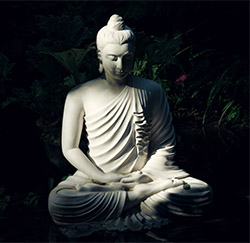 Born a prince in the 5th century BCE is what is now Nepal, Siddhartha Gautama (the Buddha) could not reconcile the suffering he witnessed outside his insulated palace life. Renouncing material pleasures, he embarked on a journey to overcome suffering. After an arduous journey filled with me false starts including nearly dying from asceticism, he eventually settled into a deep state of meditation until enlightenment was attained. His followers anointed him the Buddha, meaning the Awakened One. His teachings, collectively called the Dharma, form the foundation of Buddhism, yet their essence transcends religion – touching the same universal truths recognized by mystics and sages across traditions.
Among the Buddha’s core teachings are:
The Four Noble Truths
At the core of the Buddha’s teachings lie these Four Noble Truths, which lay out the framework for those eager to understand and ultimately transcend suffering.
- Dukkha – Life involves suffering, dissatisfaction, or restlessness.
- Samudaya – Suffering arises from craving, attachment, and ignorance.
- Nirodha – Liberation from suffering is possible.
- Magga – The Eightfold Path leads to the cessation of suffering.
No one saves us but ourselves. No one can and no one may. We ourselves must walk the path.
The Eightfold Path
This is a practical guide emphasizing ethical conduct, mental discipline, and wisdom in the form of: Right View, Intention, Speech, Action, Livelihood, Effort, Mindfulness, and Concentration.
Anatta (No-Self) and Anicca (Impermanence)
As with other perennial way teachers, the Buddha saw that the belief in a separate I is an illusion – there is no separation, only One. As such, everything is endlessly, constantly changing including these selves we call ‘I’ or ‘me.’ All of existence is dynamic and interdependent.
Nirvana
Nirvana is what others would call enlightenment, awakening, or liberation. From the Buddha’s perspective, it is the direct realization of the unconditioned, beyond name and form, and it represents the end of ignorance and the awakening to Reality-as-it-is.
Good books on the Buddha include: Old Path White Clouds: Walking in the Footsteps of the Buddha, The Heart of the Buddha’s Teaching: Transforming Suffering into Peace, Joy, and Liberation, and Buddhism: One Teacher, Many Traditions.
 Relative to others on this list, Carse is something of an enigmatic figure primarily because, by his own admission, he was never a spiritual seeker and didn’t even know such a creature existed. But during a trip into the Ecuadorian Amazon, Carse experienced a complete spiritual awakening that, in many ways, aligns with similar experiences described by Robert Adams and Ramana Maharshi to name just two.
Carse’s description of the awakening combined with his global quest to find a teacher who could help him understand what happened to him, comprises the core of his teachings, which were captured in his book, Perfect Brilliant Stillness (we recommend the audio version narrated by the late-actor, Terrence Stamp).
Carse’s description of the collapse of the ego (“there’s nobody home”) perfectly aligns with key aspects of the perennial wisdom, including:
Nonduality (Advaita)
There is no separate self, only awareness, consciousness, presence. In the book he states it very directly and succinctly: “There never was anyone who awakened, because there never was anyone there.”
Immediacy of the Real
As with other perennial wisdom teachers, Carse maintains that awakening cannot be seen as something to seek or achieve but instead to be recognized as what already is. In other words, Carse says the real, the divine, God (the label is irrelevant) simply and always IS and, as such, there is no journey to take because there is no destination to be reached. We need only see through illusion or dream of separation.
Consciousness is all there is…. There is no individual, no entity, no separate self here to do anything or to be anything, awakened or enlightened included.
Collapse of the Ego
What stands out most in Carse’s description is the collapse in the notion of a separate self. Revealed in that collapse is the aforementioned ‘perfect, brilliant, stillness.’ Everything emanates out of that stillness.
Limits of Language
Again and again Carse points to the impossibility of describing Truth. Words, he says, can be used to point to it but they can never capture it. This is central to the perennial tradition, which regards silence and direct experience as higher than doctrine or belief.
Directness
Carse’s words are not chosen to be reassuring or to provide guidance – in fact, the only ‘directions’ given come at the book’s end when he tells the reader to wake up and allow him/herself to be ripped open, hollowed out. In this way Carse shares some of the same approach as Nisargadatta Maharaj (see his listing), who was similarly, direct and unwilling to play ‘mind games’ with students.
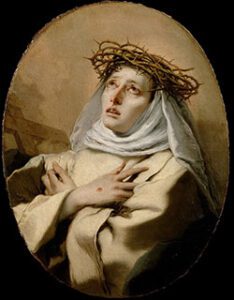 A Dominican tertiary, mystic, theologian, peacemaker, and one of the great Christian contemplatives of the Middle Ages, St. Catherine of Siena (1347–1380) is remembered not only for her intense mystical union with God but also for her fearless engagement with the religious and political powers of her day. The 24th of 25 children (you read that right), beginning at the age of 6 Catherine (real name Caterina Benincasa) regularly experienced visions and visitations from Christ Jesus, Mary, and angels. For understandable reasons this led to an all-consuming passion for truth, self-knowledge and, by extension, union with God.
“Love transforms the lover into what is loved.”
Contrary to her contemporaries, she eschewed the cloistered life for one of active, radical contemplation and action. She is said to have dictated her master work, The Dialogue, while in a state of ecstatic prayer, and was known to advise the highest leaders of the land, including popes, cardinals, and kings. She is said to have died at age 33, exhausted from fasting, service, and an inner fire that consumed every ounce of her being. Core teachings of Catherine included:
Know Yourself in God
One of Catherine’s core messages deal with the non-separation between the self and God. To Catherine, true self-knowledge results in knowledge of God, which are one and the same thing. Or put another way, one cannot truly know one’s self or God without knowing the other. This is in line with the non-dual traditions of the East and India. On the same note, Catherine said that the dissolution of the ego-self, along with its pride, fear, and sense of separation, is accomplished not through self-loathing but in absolute humility (the recognition that, as Jesus put it, ‘If of my own self can do nothing’).
Truth as Living Reality, Not Belief
To Catherine, church doctrine, rites, rituals, teachings and other intellectual pursuits cannot reveal truth. Instead, truth must be discovered within and fully experienced and ultimately embodied. “Truth,” she wrote, “revealed itself to me as neither contradiction nor confusion, but as a blazing clarity.” This is in line with the teachings of Meister Eckhart (God is not believed, God is known), Zen (direct seeing), and other perennial wisdom insights (truth is not discovered by the mind, it is revealed when the ego falls away).
Christ as the Bridge
In The Dialogue, Catherine presents Christ as the Bridge between material (egoic) vs spiritual (the Absolute) reality. Through self-centered love (ego), humanity has separated itself from its Source (God, the One, Absolute), the separation metaphorically represented as a river that serves not as punishment but ignorance and a misalignment with truth. Because the soul cannot span this separation through sheer effort, intellectual exercise, or morality, a ‘bridge’ is provided by the Christ.
Love as Ontology, Not Emotion
From Catherine’s perspective, God is Being-as-Love to be discovered and ultimate reunited with through the surrender of the self and love without a center.
Radical Humility as Awakening
Humility is not seen as moral modesty but rather an ontological alignment with reality. “Humility,” wrote Catherine, “is the doorway through which divine light enters the soul.”
To discover Catherine’s teachings requires one to read and re-read her epic, The Dialogue of St. Catherline of Siena: A Conversation with God on Loving Your Spiritual Life to the Fullest.
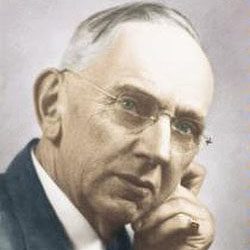 Often referred to as ‘The Sleeping Prophet,’ Edgar Cayce (1877–1945) was an American mystic and clairvoyant who gave more than 14,000 ‘readings’ from a trance state he described as an alternate state of consciousness. Cayce’s insights covered a wide range of topics including physical healing, dream interpretations, reincarnation, the nature of the soul, and spirituality. His thousands of readings were recorded and later organized by the Association for Research and Enlightenment, which to this day continues to study and disseminate his work.
Birth in the physical is death in the spiritual. Death in the physical is birth in the spiritual.
Raised in a devout Christian household with a limited formal education, Cayce nevertheless possessed a deep spiritual curiosity and a lifelong devotion to mystical Christianity. His psychic abilities reportedly emerged after a period of illness and hypnosis; when placed in trance, he could diagnose physical ailments, prescribe remedies, and speak authoritatively on spiritual and metaphysical topics far beyond his conscious knowledge.
Cayce’s teachings closely aligned with many other perennial wisdom teachers, including:
Inner, Omnipresent God
Cayce’s position that God resides within every human being in line with other perennial wisdom teachings. “The spirit of God,” he said, “is the life force within every cell.”
Evolution of the Soul
Cayce described the soul’s journey as one of continual growth through many lifetimes, each an opportunity to learn love, service, and selflessness until returning to full unity with the Creator.
The Christ Consciousness
As with other Christian mystics, Cayce believed the Christ was not limited to the historical Jesus but, instead, represented a universal consciousness of divine love and oneness available to all. Jesus, he said, exemplified the ideal of this consciousness realized in human form.
Karma and Grace
Similar Joel Goldsmith (see listing), Cayce saw karma as the spiritual law of cause and effect. Rather than a punishment, karma is a vehicle for teaching the soul through experience. The soul evolves not through punishment but through learning, forgiveness, and love – consistent with the perennial recognition of a compassionate cosmic order.
Service as the Path to Awakening
Cayce consistently stated that liberation or awakening is tied to our service to others (aka love thy neighbor as thyself). To Cayce, service, compassion, and selflessness were the true measures of spiritual development, echoing the perennial truth that awakening expresses itself through love in action.
Mind as Builder
Mirroring perennial teachings about the creative power of consciousness and the illusory nature of material separation, Cayce taught that thought shapes reality spiritually, emotionally, and physically. “Mind is the builder,” he said, “the physical is the result.”
There are many books written about Edgar Cayce, including The Edgar Cayce Handbook, The Story of Edgar Cayce: There Is a River, and The Edgar Cayce Remedies: A Practical, Holistic Approach to Arthritis, Gastric Disorder, Stress, Allergies, Colds, and Much More.
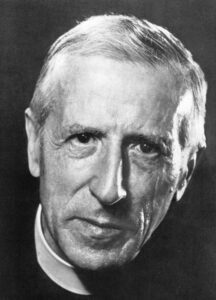 A French Jesuit priest, paleontologist, and philosopher, Pierre Teilhard de Chardin (1881–1955) spent much of his life attempting to reconcile evolutionary science with Christian mysticism. Trained as a scientist (he contributed to early paleoanthropology, including work associated with Peking Man), Teilhard simultaneously pursued a deeply contemplative, cosmic vision of God, humanity, and consciousness.
As was the case with many other contributors to the perennial wisdom, many of writings were severely restricted by church officials who condemned them as speculative and radical (aka threatening). After his death, however, his work gained wide influence across theology, spirituality, philosophy, systems theory, and even modern discussions of consciousness.
“Someday, after mastering the winds, the waves, the tides, and gravity, we shall harness the energies of love. Then for the second time in the history of the world, man will have discovered fire.”
Much of Teilhard’s exposure to both science and Christian mysticism led him to believe in a single, unifying vision of reality. Evolution, he maintained, was not simply biological but represented mankind’s gradual awakening toward divine union. Teilhard’s most famous quote: “We are not human beings having a spiritual experience. We are spiritual beings having a human experience.”
Key contributions to the perennial way include:
Evolution as Sacred Process
Far from representing a threat to God, Teilhard saw evolution as God’s handiwork; matter evolving into life, life into mind, mind into self-awareness. He saw the entire process driven by a hidden, divine intelligence.
The Noosphere (Sphere of Mind)
Building on the work of biogeochemist Vladimir Vernadsky, Teilhard believed that humanity is forming a global layer of shared consciousness – the noosphere – through a combination of culture, language, technology, and reflective self-awareness. Similar focuses on collective awakening can be found in Vedanta, Mahayana Buddhism, and Neoplatonism. As with the theoretical physicist John Wheeler, Teilhard saw consciousness not as private or isolated but participatory and universal.
The Omega Point
Perhaps Teilhard’s most famous idea, the Omega Point posits a future convergence of all consciousness into a unity with God (what Teilhard called the Cosmic Christ). Teilhard considered love, not force, the binding energy of consciousness, and saw the Omega Point not as the end of individuality but completed union with Source.
Christ as the Inner Axis of the Cosmos
Along those same lines (and in keeping with other perennial way teachers, Teilhard saw Christ not simply as a historical savior but as the organizing principle of the universe and the divine Logos drawing all things toward coherence.
In short, Teilhard believed: that the diversity of existence belies a hidden unity of One; that matter evolve toward consciousness / awareness which in turn seeks reunion with its source; that far from being random and chaotic, the universe is consistently moving toward integration, love, and intelligent order; and that love is the universal glue to the whole thing.
Key works by Teilhard include: The Phenomenon of Man, The Divine Milieu: The Essential Classic of Jesuit Theology on Spiritual Life and Universal Destiny, The Heart of Matter, Pierre Teilhard de Chardin: Writings.
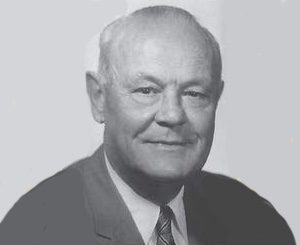 A 20th-century American metaphysical teacher, lecturer, and writer, Starr Daily (1893-??) worked at the intersection of Christian mysticism, non-dual metaphysics, and practical inner transformation, often emphasizing direct realization over doctrine. Though not particularly well-known, Daily’s work was held in high regard by New Thought and Christian metaphysical practitioners of the early-20th century.
A lifelong, hardened criminal, Daily underwent a profound spiritual revelation while doing time in solitary confinement under conditions that, today, would be described as torture (starvation rations, suspended for days by his wrists, his toes barely touching the ground, etc.). As Daily would later explain, his life of emotional suffering, years of imprisonment, solitary confinement, and extreme suffering combined to shred his ego and, in the process, reveal the Truth within that had always been there. As Daily saw it, locked away in the bowels of the prison, his body dying, he had been unwittingly freed of the sense of identity, distraction, and future projection, causing the scaffolding of ego to collapse. What remained was a direct encounter with divine presence, not as an idea but as an unmistakable inner reality.
Key aspects of his teachings include:
Freedom is Not Spatial
Similar to others suffering in dire circumstances, Daily suddenly recognized that while the body may feel enclosed, awareness / consciousness is not. Daily came to see that the remote figure he’d been taught was God was not an external rescuer but the very ground of consciousness, untouched, complete, perfect.
God as Immediate Presence
Along those same lines, Daily taught that God is accessible to one and all, here and now through inner stillness. This of course aligns closely with virtually all perennial way teachings (aka ‘the Kingdom of God is within you’). Daily urged his listeners to awaken to what already is, not seek meaning or a heaven outside themselves or beyond this life.
Inner Realization Over Belief
As with all perennial way teachers, Daily stressed the importance of direct, experiential knowing, not dogma or doctrine. He saw direct apprehension of Truth as the only path to dissolving fear, separation, and striving.
Transcending the Ego
Daily viewed the ego or personal sense of self as a useful but limited construct that obscures our true nature when mistaken for who we are. As with others, Daily saw the ego as a necessary vehicle for moving through life – but an impediment to Truth if elevated to master versus servant. Importantly, Daily did not advocate ego destruction, but ego transparency—allowing the deeper Life to shine through personality.
Ultimately, Starr Daily’s contribution to the perennial way lay in his direct, no-nonsense approach to mystical insights. Through his own direct experiences, he was able to bridge the often ineffable teachings of Christian mysticism and non-dual metaphysics with everyday language that resonated with his audiences. Daily maintained that Truth is something to awaken to, not attain; God is indeed nearer than breathing and what we actually are when fear and striving fall away; and Christ is to be realized, not worshipped.
Key works by Starr Daily include: Love Can Open Prison Doors, Starr Daily’s Triple Feast, and Release.
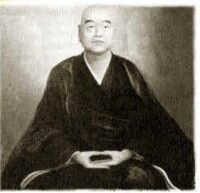 A Japanese Zen Buddhist monk, teacher, and philosopher, Dōgen founded the Sōtō school of Zen in Japan and is considered one of the most profound spiritual teachers in Japanese history. His best-known work is Shōbōgenzō or ‘Treasury of the True Dharma Eye,’ a vast collection of writings that explore the nature of existence, practice, and awakening. The core themes of his teachings include:
- Practice and Enlightenment Are One
Dōgen taught that enlightenment is not something attained in the future, but expressed in the present through practice itself. Sitting in meditation is awakening. - Impermanence and the Nature of Being
He deeply reflected on impermanence—not as a source of despair, but as the very dynamic expression of reality. - Shikantaza (Just Sitting)
Unlike methods aimed at attaining visions or mystical states, Dōgen emphasized “just sitting”—a radical openness to reality without clinging, grasping, or seeking. - Seeing the Sacred in the Ordinary
For Dōgen, enlightenment was not escape from the world, but full intimacy with each moment—chopping wood, carrying water, cooking, eating, all infused with the sacred.
Do not follow the ideas of others but learn to listen to the voice within yourself. Your body and mind will become clean and you will realize the unity of all things….
Although Dōgen did not speak in theistic terms (since Zen Buddhism does not posit a personal God), his teachings resonate with seekers of the Divine in profound ways:
- Letting Go of the Ego: His insistence on non-grasping and self-emptying parallels mystical traditions (Christian, Sufi, Jewish, Hindu) that teach union with God comes through surrender of the ego.
- Direct Experience: Instead of speculating about God or the Absolute, Dōgen’s practice immerses the seeker in direct encounter with ultimate reality, beyond concepts.
- Sacred Immediacy: By showing that every moment of life can be lived as awakening, Dōgen helps seekers realize the presence of the Divine not “out there” but right here.
- Union Rather than Duality: His view that practice and enlightenment are not two mirrors the way many mystics speak of humanity’s innate union with God, waiting only to be realized.
In short, for one searching for God, Dōgen’s way does not offer God as an object to be grasped, but rather invites one to drop searching and awaken to the immediacy of the sacred presence—what some might call “God”—in this very moment.
A good starting place for those interested in Dōgen may be The Essential Dogen: Writings of the Great Zen Master.
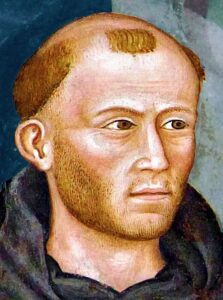 A German Dominican friar, theologian, preacher, and mystic, Meister Eckhart (1260 – 1328) writings and sermons were some of the first – and perhaps most articulate (at least for the time) – Western expressions on non-dual realization.
As with most other perennial wisdom teachers, Eckhart maintained God only could be known through direct experience, not the concepts, dogmatic orthodoxies, and religious intermediaries of the day. Later in his life, it would be these ‘heretical’ views that would put Eckhart on trial for his life (not to mention at risk of the medieval tortures common to the era). Mercifully, Eckhart would die before a verdict was reached.
“The eye with which I see God is the same eye with which God sees me.”
Unlike so many other, lesser-known perennial teachers, Eckhart’s razor-sharp intellect made him exceedingly well-known to church figures, who saw his stubborn insistence on God and man as one a direct threat to their authority.
Key tenets of Eckhart’s teachings included:
The Godhead beyond God
Eckhart distinguished between the personal, conceptual attributes assigned to God by the church, and the ‘Godhead’ – the formless, nameless, infinite Source that existed beyond mind-made distinctions. “God is not found in the soul by adding anything,” he wrote, “but by a process of subtraction.” This argument is well-known to perennial way students.
Releasement (Letting-Go)
A core aspect of Eckhart’s teachings was the idea of Gelassenheit, meaning finding serenity through detachment and surrender to God. The seeker must let go of the idea of him/herself as a separate ego, let go of images and ideas of God, and let go of spiritual striving itself. “To be full of things is to be empty of God,” wrote Eckhart. “To be empty of things is to be full of God.”
The Birth of God in the Soul
Eckhart maintained that the Christ is eternally ‘born’ in the deepest ground of the soul, and true spiritual awakening lies in recognizing (re-discovering) one’s identity in that ground.
The Ground (Grunt) of the Soul
Along those same lines, Eckhart described the deepest center of the self as un-created, un-manifested, timeless (infinite), and identical with the divine. This aligns with countless other perennial wisdom teachings, including ‘I and the Father are One.’
Universal Access to God
The teaching that put Eckhart most at risk with church leaders was his insistence that the experience of God was available to every human being, not just the monks, priests, and elites who claimed that right for themselves. He maintained that moral behavior, love, and other decencies commanded by the church could only truly be realized through inner transformation.
Silence and Unknowing
Eckhart also stated that one’s true nature could only be discovered when all attachments to oneself and the outside world were surrendered and replaced by silence.
Key works on Meister Eckhart include: Meister Eckhart’s Book of Darkness & Light: Meditations on the Path of the Wayless Way, The Complete Mystical Works of Meister Eckhart, Selected Writings.
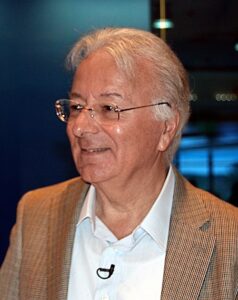 An Italian-American physicist, engineer, inventor, and entrepreneur, Federico Faggin is – at least for now – best known for his groundbreaking contributions to modern computing, including co-developer of MOS silicon-gate technology and the world’s first commercial microprocessor. His technical career includes leadership roles at companies like Intel, Zilog, and Synaptics and many prestigious awards, including the U.S. National Medal of Technology and Innovation.
“Creativity, ethics, free will, and joyful love can only come from consciousness.”
More recently, Faggin has shifted his focus from the material worlds of hardware and technology to the nature of consciousness and reality. He founded the Federico and Elvia Faggin Foundation to support scientific research into consciousness and developed a philosophical framework that places consciousness as fundamental, rather than a by-product of matter or brain processes.
Key contributions to the perennial way include:
Consciousness as Fundamental
As with many other perennial way teachers, Faggin maintains that consciousness is the foundational substrate of reality rather than, as so many of his scientific contemporaries still argue, a property of the brain or physical processes. In Faggin’s models, matter and physical phenomena are expressions of deeper, quantum-grounded conscious processes.
Quantum and Metaphysical Ideas
Faggin proposes that conscious experience correspond to pure quantum states that are fundamental to individual consciousness. As modern quantum physics is demonstrating, what we call physical reality is shaped not by material forces but, rather, as a participatory process between consciousness and particle / wave-form probabilities. (Translation: the universe is infinite wave-form probability until consciousness enters the picture, at which point the wave-form collapses and a seeming particle-based material world materializes.)
Spiritual Experience and Purpose
Much of Faggin’s late-career motivations team from a profound mystical experience of self-realization and unity that occurred in his Lake Tahoe kitchen during a holiday break. To Faggin, the experience revealed an unmistakable and incontrovertible revelation of consciousness as the essence of reality.
Consciousness is Primary
Similar to the perennial wisdom’s teaching that consciousness is the real ground of being and the material is secondary or derivative, Faggin’s science-based model similarly asserts that consciousness precedes and shapes physical reality.
Unity and Interconnectedness
Similarly, just as the perennial way posits that individual existence is an expression of, though not separate from, the One, Faggin sees a deep interconnectedness of conscious beings within a unified reality.
Convergence of Science and Spirituality
In much the same way that perennial way teachers seek to align exoteric science with esoteric truth, Faggin seeks marry quantum physics with experiential insights into consciousness.
Key works by Federico Faggin include: Irreducible: Consciousness, Life, Computers, and Human Nature and Silicon: From the Invention of the Microprocessor to the New Science of Consciousness.
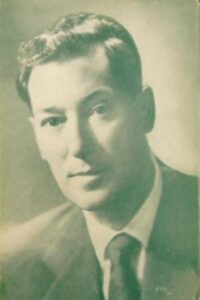 A mystic, lecturer, and writer best known for his teachings on imagination as the creative power behind what we call reality, Neville Goddard (1905–1972) was a metaphysical practitioner falsely limited to the era’s New Thought movement. In truth, Goddard’s teachings ran much deeper and in ways that closely align with the perennial wisdom, specifically the idea that ultimate reality is found in consciousness, which is of course none other than ourselves.
The fourth of 10 children born in Barbados, Goddard eventually made his way to New York City to study theater. While there he received tutoring from a mysterious Ethiopian mystic known as Abdullah, and soon after claimed his own mystical revelations.
“The world is a mirror, forever reflecting what you are doing, within yourself.”
Key aspects of Goddard’s teachings include:
Imagination is God
This is not a metaphorical teaching – Goddard literally meant that human imagination’s powers of creativity are God made manifest.
Consciousness As Ultimate Reality
As with other perennial way teachers, Goddard taught that the external world – the world of appearance or effect – is a projection of inner consciousness. We are not in the world, the world is in us.
The Self as Divine
Comparable to Joel Goldsmith’s assertion that each of us is God manifested in individual consciousness, Goddard maintained that we are God, projected as individual. Not the ego, mind you, but the Self as the One expressed individually. Also like Goldsmith, Goddard interpreted the bible symbolically, not metaphorically. So to Goddard, God equated to human imagination; Jesus was the awakened divine self (available to us all); resurrection was awakening; and salvation was self-realization.
Inner Consciousness, Not Outer Effort
Goddard taught that states of consciousness produce experiences. Rather than getting what you want, you BECOME what you are conscious of being. This too is comparable to Goldsmith’s teaching that we do not pray to God FOR anything because God already is perfection itself. Instead we open our consciousness to recognize what already is, be it health, supply, companionship, and so on. This aligns also with the words of Jesus: “Therefore I tell you, whatever you ask for in prayer, believe that you have received it, and it will be yours.”
In terms of the perennial wisdom, Goddard aligned closely with most of its most radical teachings, including:
- Nonduality: Subject and object are one and the same
- Awakening: Self-realization is the ultimate goal or purpose to existence
- Scripture: Saw it as psychological or mystical allegory (aka religious texts are to be interpreted as symbolic maps of human consciousness, not historical records to be memorized and followed literally).
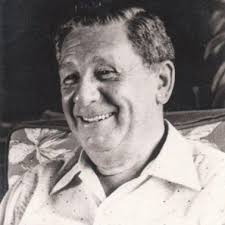 Born into a Jewish home, Goldsmith eventually found himself ensconced in Christian Science before a series of revelations led him to create his own work, the Infinite Way. A mystic, spiritual teacher, and healer, Goldsmith eschewed the idea of organized religion or spirituality and demanded that his followers not create an official organization, movement, or religion about his own teachings. Key aspects of his teachings included:
God is Human Consciousness
Goldsmith taught that God is not a ‘Santa Claus in the sky’ but instead an indwelling spirit – literally the essence of one’s own being. True prayer, he said, is not speaking to or petitioning or cajoling God but rather being still and allowing the ‘still small voice’ to be heard (communion with God).
Illusion of Separation
Goldsmith held that all human suffering stemmed from the belief in ‘two powers’ borne from our separation from God. Good vs evil, spirit vs mammon, these competing (dualistic) powers created in humans a profound sense of fear and isolation that was totally unnecessary because, in the words of all mystical traditions, I and God are One.
God expresses God, and that expression appears as you.
Grace
He argued that God could only make its way into our lives when we got our ego out of the way. Through surrender, God’s grace could spontaneously do its work through us. In other words, the mind could be used to start the journey, but it could never complete it. God is found in the silence / stillness of our being, not in words and thoughts and deeds (he similarly argued that while good was naturally preferred to evil, the mistake too many made was in believing that their good works would act as a conveyor to God).
Meditation as Practice
In an era (1930s – 50s) when meditation was virtually unknown to Western audiences, Goldsmith held that contemplative meditation was critical to spiritual development and divine inspiration. He regularly started and ended his talks with stretches of meditation.
The Infinite Invisible
Goldsmith regularly described God and ‘heaven’ as the infinite invisible to be found not in some future place but through our own consciousness. Through regular meditation we gradually awaken to an inner sense of presence of awareness that takes over our lives (lives that were never ours to begin with).
Goldsmith was a prolific writer. Among his best-known and most accessible books are: The Infinite Way, The Thunder of Silence, The Art of Meditation, Practicing the Presence, and The Art of Spiritual Healing.
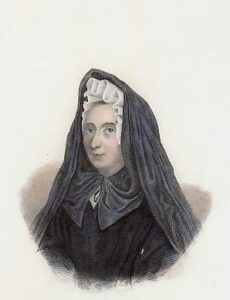 More commonly known as Madam Guyon, Jeanne-Marie Bouvier de la Motte-Guyon (1648–1717) was a French contemplative whose writings on prayer, surrender, and interior transformation were foundational to the Quietism doctrine and the Quaker movement.
Although she never used the term Quietism, Guyon instead advocated a life spent in a “loving repose in God.” As with other perennial wisdom teachers, Guyon championed the idea of every human having direct access to the divine within and further maintained that such access required neither religious ritual nor intermediaries. Because such teachings flew in the face of the mighty Catholic church of the time, Guyon at times was threatened with imprisonment in the famous Bastille.
He who has learned to seek nothing but the will of God, shall find what he seeks.
Core aspects of Guyon’s teachings that most closely align with the perennial wisdom include:
Interior Illumination
Guyon taught that the only true sanctuary lay not within houses of worship but within one’s own being. God, she argued, is not found through effort and strain but in stillness and rest. “Rest. Rest. Rest in God’s love.”
Absolute Surrender
One cannot approach or know God so long as one is filled with desires, fears, efforts, and agendas. Instead we must surrender all of these because only then is the ego sufficiently silenced to make room for God.
Continuous Prayer
Much like Joel Goldsmith and other perennial teachers, Guyon said one must exist in a state of continuous prayer to God. Also like Goldsmith, this prayer is not filled with talk, thought, and recitations but rather an inner yielding to God’s will and an open ear to listen.
Union, Not Separation
Guyon’s theology was rooted in a love that dissolves the boundaries between others and the outside world. To love one’s neighbor is to love oneself.
Madam Guyon’s most notable work is the surprisingly modern, A Short and Easy Method of Prayer: Discovering Peace and Intimacy through Fellowship with God. Another spiritual classic is Guyon’s book, Experiencing the Depths of Jesus Christ.
An American psychiatrist, consciousness researcher, spiritual teacher, and author, David Hawkins (1927–2012) worked to translate perennial insights into a modern, self-architected scientific framework. His ultimate goal was to making ancient wisdom teachings like those found in the perennial wisdom easily accessible, understandable, and even measurable to laypeople.
A professional psychiatrist, much of Hawkins’s lifelong interest in spirituality and consciousness stemmed from a formative mystical experience he underwent as a child trapped in a severe snowstorm while delivering newspapers. After digging out a makeshift snow cave in an attempt to keep warm, Hawkins abruptly experienced a complete and sudden collapse of the self, replaced by a sense of vast stillness, luminosity, and infinite peace. “There was,” he said, “no ‘me’ having the experience.”
“Truth is not determined by consensus.”
Although his father would eventually find him and bring to an end the experience, Hawkins maintained that the outside world never again felt the same; that his sense of self felt provisional and truth entirely impersonal. He felt his life from that day forward was driven by an insatiable need to understand, articulate, and ultimately realign with the experience.
Key aspects of Hawkins’s work that aligned with the perennial wisdom include:
Impersonal Truth
Similar to perennial schools of thought such as Vedanta, Zen, Sufism and Christian mysticism, Hawkins taught that Truth transcends belief, authority, and ego.
Surrender
Hawkins maintained that a life spent polishing and improving the ego / self was a wasted life. Instead our goal should be to let go of everything – attachments, striving, pride.
Love As the Operative Power
Hawkins was best known for his insistence that force (characterized by coercion, fear, and ego) was antithetical to power (love, integrity, truth). Truth and our growth in it was contingent on our embrace of and surrender to power and concomitant rejection of force.
Nondual Realization
As was the case with many Western-based perennial teachers, in his later years Hawkins embraced nondual awareness wherein the subject-object split collapses to reveal One.
Key works by Hawkins include: Power vs. Force, I: Reality and Subjectivity, The Eye of the I: From Which Nothing is Hidden, Truth vs. Falsehood: How to Tell the Difference, The Final Doorway to Enlightenment: Prayer, Transcendence, and Realization of the Self.
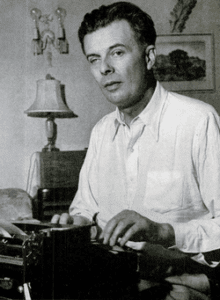 An English novelist, essayist, and spiritual philosopher, Aldous Huxley (1894–1963) is widely considered the originator of the term, ‘perennial wisdom.’ Particularly in his later years, Huxley argued that all authentic religious, spiritual, and mystical traditions pointed to the same ultimate reality.
The metaphysic that recognizes a divine Reality substantial to the world of things and lives and minds; the psychology that finds in the soul something similar to, or even identical with, divine Reality; the ethic that places man’s final end in the knowledge of the immanent and transcendent Ground of all being.
Although known to most 20th-century high school students for his dystopian classic, Brave New World, Huxley’s memory will likely endure due to his deep exploration into mysticism, metaphysics, psychology, and consciousness. Specific contributions include, but are certainly not limited, to:
The Perennial Philosophy
Published in 1945, The Perennial Philosophy: An Interpretation of the Great Mystics, East and West, is the first and perhaps still best distillation of the accumulated wisdom behind the perennial tradition. In particularly, the book offers in-depth collection of passages from:
- Christian mystics (Eckhart, Tauler, St. John of the Cross)
- Hindu Vedanta (Upanishads, Shankara)
- Buddhism (Zen, Mahayana)
- Taoism
- Sufism
- Jewish mysticism
- Neoplatonism
Direct Knowledge / Gnosticism
As with the perennial teachers he quoted, Huxley strongly emphasized the importance of gnosis or direct knowing over religious doctrine. Truth, he said, is the be realized, not believed in or trusted. The mind can and should be used to start the investigation, but it is only through the transformation of consciousness that Truth is known.
Ego As Roadblock
Huxley consistently taught that self-centered consciousness is the key impediment to the realization of Truth. He likened the ego to a ‘reducing valve’ that, while helping us function in life, if unchecked blinds its owner to the Infinite.
Ethics Flow from Awakening
For Huxley, being moral or good was tied not to human-constructed rules but the understanding of Truth. When one discovers Truth, compassion, love of others, etc., comes naturally – it is unavoidable.
Mysticism, Psychology, and Consciousness
Far ahead of his time and in line with recent discoveries of quantum physicists, Huxley maintained that the brain does not create consciousness. Instead, he said, it limits it in order for the so-called human being to manage in this world. This idea helped to influence the world of transpersonal psychologists, psychedelic researchers, and consciousness studies.
Psychedelics as Temporary Openings
In his book, The Doors of Perception and Heaven and Hell, Huxley described his experiences with mescaline as a temporary glimpse into a realm of consciousness permanently achieved by mystics through disciplined practice, surrender, and grace. Huxley took pains to point out that psychedelics could not and were not intended to replace true spiritual maturity and awakening. To Huxley, these entheogenic compounds are merely powerful experiences, not true transformative realization.
Along with the books listed above, a good starting point for those new to Huxley is probably the collection of essays, The Divine Within: Selected Writings on Enlightenment.
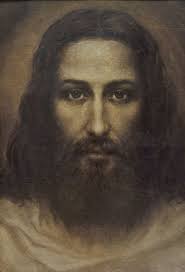 There is no spiritual figure better known that Jesus of Nazareth aka Christ Jesus. Although his actual itinerant ministry lasted perhaps three years at most, Jesus rocked a dusty little corner of the Roman empire with then-revolutionary admonitions to love one’s neighbor as oneself, turn the other cheek when struck, surrender more to the thief, etc. More than 2,000 years later the popularity of Jesus’s teachings remain unparalleled.
Core tenets of Jesus’s teachings include:
Union with the Divine
Jesus repeatedly pointed out that we are one and the same with God / the divine (what Jesus called ‘The Father’). Jesus’ message points beyond belief toward direct realization — knowing God not as an external being but as the living Presence within.
The Kingdom of God Within
As with other perennial wisdom teachers, Jesus maintained that our true nature was not to be discovered in the future or after death or but was, instead, already and always with us (‘closer than breathing’). In preaching that the kingdom of God is within each of us, Jesus was telling his followers that God cannot be found ‘lo here or lo there’ because it is at the very core of our being. In the perennial wisdom, the kingdom could be see as the state of awakened consciousness.
Whoever finds the meaning of these words will not taste death.
Love
At a time when a tooth for a tooth and an eye for an eye were the moral codes of the day, Jesus’s teachings are nothing short of revolutionary – particularly when it came to the concept of love. From the perspective of Jesus, you could not maintain that you loved God if you hated your neighbor (or an enemy), because all was One in God. As such he counseled that personal transformation was only possible when we loved a neighbor as ourselves and when we prayed for those outside our immediate circle.
Dying Before Death
Knowing his message would exist long after he was gone, Jesus leaned heavily on metaphor and other linguistic devices. In expressions such as ‘taking up the cross’ and being ‘born again’ Jesus was pointing to the idea of a death of the ego so that our true nature might be revealed. This of course is very much in line with perennial philosophy teachings, including the idea that one must ‘die daily’ to this life if he or she is to directly experience God.
God In All
Another of Jesus’s revolutionary teachings (we take them for granted now) was the recognition of God in all, including sinners and the diseased. He took pains to point out that ‘what one does to the least does to God.’ This is in line with the perennial wisdom’s teaching that the divine is all that there is – that to love or serve others is to love and serve oneself, which is God Itself.
Direct Experience
Although the Christian faith was erected in his memory and name, Jesus saw organized religion as anathema to mystical truths. While he did not call for the destruction of religions, he urged their followers and leaders to restore the living essence behind them. A cornerstone to that was the idea that direct experience of the divine was key, not religious dogma and definitely not human interlopers coming between an individual and God (e.g., priests and pastors).
The Universal Christ
Despite what many believe, Christ was not the surname of Jesus. It actually is a title meaning “the Anointed One” and is derived from the Greek christos and the Hebrew, mashiach or Messiah. From the perspective of the perennial wisdom, the Christ is a universal divine consciousness made manifest in Jesus (and other perennial wisdom teachers) but also intrinsic to every human being. Christ consciousness, in other traditions, is known as the Atman, the Tao, and the Buddha nature.
We recommend Elaine Pagel’s book, Beyond Belief: The Secret Gospel of Thomas, in part because this is the gospel said to be comprised entirely of the words of Jesus and because so many of those same quotes are in the very same spirit of the perennial wisdom teachings.
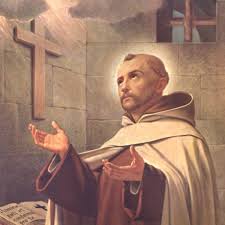 A Spanish mystic, poet, and Carmelite friar, John of the Cross (1542 – 1591) is widely regarded as one of the greatest Christian contemplatives. Alongside St. Teresa of Ávila, he reformed the Carmelite order and became a central figure in the tradition of Christian mysticism and its teachings of individuals advised to seek a direct, experience of God. His most famous works, including The Dark Night of the Soul, The Ascent of Mount Carmel, and The Spiritual Canticle, are delivered as a combination of poetry and deep spiritual psychology in their description of the soul’s journey toward union with God.
In tribulation immediately draw near to God with confidence, and you will receive strength, enlightenment, and instruction.
Teachings of John of the Cross that contribute to the perennial wisdom focus on a threefold path to spiritual transformation:
The Purgative Way
Here we find the individual undergoing the first stages of purification, perhaps beginning with seeing through the illusory nature of desire, the falsity of ego, the illusion of the world around it. This aligns perfectly with other perennial wisdom teachings espousing detachment from the outer world.
The Illuminative Way
By abandoning egoic pursuits and the desires that drive them, the inner light of divine truth begins to shine through.
The Unitive Way
Ultimately the false self altogether collapses and is fully absorbed into God’s unconditional love. Comparable to Rumi’s all-consuming talk of the unity of love and the vedantic tradition of self-realization, this is the final stage of union with God.
John of the Cross is perhaps most famously linked with the symbology found in the dark night of the soul, wherein the individual is said to undergo a period of trial and tribulation. Feeling lost, abandoned, and stripped of all certainty, the individual becomes what we would call ‘depressed’ but this is actually signs of God drawing him / her closer to the surrender and purification required of the threefold path.
As noted above, the famous works of John of the Cross are: The Dark Night of the Soul, The Ascent of Mount Carmel, and The Spiritual Canticle.
 Julian of Norwich holds the distinction not just as a medieval English mystic and spiritual writer in an age where women rarely if ever were permitted such voices, but also as the author of the earliest known book written in English by a woman. The book, Revelations of Divine Love, is considered one of the most profound meditations on Christian mysticism and is based on a series of divine revelations she experienced during a serious illness in 1373.
Core tenets of her teachings included:
Divine Unity and Love Are the Ultimate Reality
One of Julian’s most famous revelations was that God is love. Not that God is loving but rather that God is love itself. God / Love is the essence of all being. As such all of creation is sustained in and by this love.
God made it, God loves it, God keeps it.
Oneness of God and Creation
Along that same note, Julian said there is no separation between God and any element of its creation – everything is and only is God. She said: “We are not just made by God, we are made of God.”
“We are not just made by God, we are made of God.”
The Feminine Face of the Divine
Fittingly, in her mystical illuminations Julian experienced God not only as Father but also as Mother, especially through the image of Christ as a nurturing, life-giving presence. Julian’s emphasis on the divine feminine mirrors similar insights from other traditions, including Shakti in Hinduism and Shekhinah in Kabbalah.
Evil, Suffering, and the Larger Harmony
One of her most famous – and controversial – insights was that all is well regardless of its perceived value in the human mind. Evil and suffering, she maintained, is part of a greater divine purpose, a recognition of cosmic harmony and ultimate reconciliation, akin to the perennial idea that dualities (good/evil, life/death) are resolved in the higher unity of the Real.
Direct Experience of the Divine
Julian did not speak of belief or dogma, but of knowing—a direct, intimate awareness of God within the soul. This aligns with the perennial wisdom’s commitment to direct knowing (gnosis) vs scripture alone.
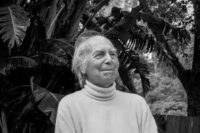 Klein was a French-born spiritual teacher and author known for presenting Advaita Vedānta in a humble, approachable style more accessible to Western audiences. Klein fled Nazi-occupied Europe and spent several years in India where he met his teacher, Pandit Veeraraghavacharya, and underwent intense spiritual training. After the war, Klein returned to Europe and offered quiet talks not unlike Vedantic satsangs. In keeping with the nondual (Advaita) lessons he received in India, Klein taught that subject and object, self and world were not two – that there is only One manifesting as many.
Core tenets of Klein’s teachings included:
The Natural State
We are always, already the timeless awareness that perceives all experience. Spiritual practice does not create this awareness—it reveals what has never been absent.
It is only through silent awareness that our physical and mental nature can change. This change is completely spontaneous.
Effortless Awareness
Klein taught that the mind’s striving obscures the reality of being. The shift from doing to being allows awareness to reveal itself naturally, without force.
The Body as Gateway
Trained in medicine and music, Klein integrated somatic sensitivity into his teaching, using relaxation and body-awareness to dissolve psychological resistance and foster inner stillness.
Freedom Beyond the Ego
Liberation (moksha) is not an achievement of the individual ego, but the recognition that there is no separate self to be liberated.
Klein wrote a number of books, most notably I Am, The Ease of Being, and Be Who You Are.
 A humble Carmelite lay brother in 17th-century France, Brother Lawrence is best known through the posthumous collection of his conversations and letters titled, The Practice of the Presence of God. Much like Rumi or Wei Wu Wei (see listings), Brother Lawrence held no formal theological position, yet his simple, straight-forward, spiritually-radiant prose has influenced countless seekers across time.
Crippled by an injury and with little formal education, Brother Lawrence worked mostly in the monastery kitchen and later repaired sandals. Yet in his ordinariness, he discovered something extraordinary: the possibility of being continuously and joyfully aware of God’s presence in every act, no matter how mundane. He described this awareness not as a mystical trance but as a quiet, continual conversation with the Divine, maintained through love and simplicity of heart.
We ought not to be weary of doing little things for the love of God, who regards not the greatness of the work, but the love with which it is performed.
Core tenets of Brother Lawrence’s teachings included:
Practicing the Presence of God:
At the heart of Brother Lawrence’s teachings was the idea that God is not confined to churches or other specific places of worship. Instead, God can be found anywhere and always. This ties in with the perennial wisdom’s teachings on God’s omnipresence (God is everywhere, always). As such, Brother Lawrence prescribed a constant focus on God while engaged in every day activities – cooking food, cleaning the home, walking. This he called practicing the presence of God. “The time of business does not differ from the time of prayer.”
Simplicity and Surrender
Along those same lines, Brother Lawrence advised seekers to do away with complex rites and rituals, turn away from self-concern, and focus solely on an intention of selfless love. “We should establish ourselves in a sense of God’s presence by continually convering with Him.”
Inner Stillness and Joy
Lastly, he said true peace comes not from outer activities and focuses but, instead, an inner communion with the divine that is resident in each of us. peace comes not from external conditions but from inner communion with the divine Reality.
“The time of business does not differ from the time of prayer,” he said, “and in the noise and clatter of my kitchen… I possess God in as great tranquility as if I were upon my knees.”
The core of his teachings can be found in his book, The Practice of the Presence of God.
 Wife of a merchant, mother of 14 children, Margery Kempe was a mystic from the Middle Ages who underwent a series of spiritual revelations that manifested in spontaneous outbursts of tears and audible weeping that often landed her in trouble with the clergy. At some point she experienced a direct revelation from Christ Jesus, forever changing her life and compelling her to undertake numerous spiritual pilgrimages across Europe and the Middle East.
Her lone book, The Book of Margery Kempe (often referred to simply as ‘The Book’), is considered by many to be the first autobiography penned in the English language.
Key aspects of her teachings that align with the Perennial Wisdom include:
God is Within
As with mystical contributors to the perennial wisdom, Kempe eschewed traditional religious hierarchy and doctrine in favor of seeking a direct, experiential relationship with God. She did not believe mediation between church and God was required.
I saw with the eye of my soul that he was with me and never parted from me.
Suffering as a Vehicle for Transformation
Often mocked by clergy and her townspeople, Kempe’s weeping was, in her estimation as well as other mystical authorities, symbolic of the soul’s purification through compassion and an identification with Christ’s suffering (at one point Kempe had a vision she had taken part in the crucifixion of Jesus). ,
Divine Love as the Ultimate Reality
As with other mystics including Julian of Norwich (whose counsel she sought during one of her many pilgrimages), she saw that love is the essence of God and existence itself.
Egoless Surrender
In her earlier years Kempe struggled with pride, sexual desire, vanity, and other states of ego and gradually recognized that to reach God requires the individual to abandon ego / self.
Universal Compassion
Her direct recognition and experience of Christ’s suffering led Kempe to earnestly pray for the suffering of all living creatures.
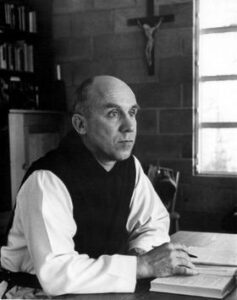 n American Trappist (Cistercian) monk, contemplative writer, poet, social critic, and interfaith bridge-builder, Thomas Merton (1915–1968) spent most of his adult life at Gethsemani Abbey in Kentucky. There he embraced a life of silence and prayer while simultaneously becoming one of the most influential spiritual voices of the 20th century.
Merton’s autobiography, The Seven Storey Mountain, explained the relentless, interior compulsion that drove him to the life of a contemplative and also ignited a wave of spiritual interest in an America attempting to find its footing in a post-WW II world. Merton introduced huge numbers of readers to a brand of contemplative Christianity different from the orthodoxy found within church walls.
Across the course of his life, Merton penned more than 70 books on a diverse array of topics including mysticism, Eastern spirituality, monastic life, poetry, and social justice.
“Contemplation is not a matter of ideas but of life.”
Even today Merton is considered one of the clearest messengers on key aspects of the perennial wisdom and the contemplative struggles and efforts that inevitably lead seekers to its teachings. Key tenets of Merton’s works include:
Direct Experience over Belief
Contrary to his more orthodox contemporaries, Merton insisted God only could be known through direct, contemplative-led experience, not doctrine, concept, and intermediary.
The False vs. True Self
Merton was one of the first modern voices to clearly and unequivocally explain the idea of a false ego – self constructed of fear, judgment, and conditioning. The ego, he wrote, “is the self that wants to exist outside the reach of God’s will and God’s love.” The result is a life of suffering, pleasure-seeking, and fear. The true Self, on the other hand, is always One with God and is discovered through silence, surrender, and contemplation.
Silence as the Gateway to Reality
As with all perennial wisdom teachers, Merton insisted that silence was there God lived and could be known. Silence, he said, is not absence, it is presence. Merton took up residence at Gethsemani Abbey because he felt pulled toward silence, stillness, and solitude – familiar tools on the perennial way.
Radical Unity of Being
Standing on a street corner in Louisville one day, Merton said he experienced an abrupt, mystical experience that revealed the transcendent love and light emanating from and through everyone around him. “I suddenly saw the secret beauty of their hearts … that they were all walking around shining like the sun.” Like David Carse (see listing) in more recent times, Merton was staggered by the realization they could not see this Truth because of their mistaken belief in being separate, individual beings.
Interfaith Bridge-Builder
Merton also was one of the first Western spiritual teachers to proactively learn about and engage in Eastern wisdom traditions, including Zen, Vedanta, and Buddhism. He was known to regularly correspond with the likes of the Dalai Lama, D.T. Suzuki, and Thich Nhat Hanh.
Action Flowing from Contemplation
Merton rejected the idea that the spiritual and material worlds could not co-exist, instead insisting that true spiritual contemplation naturally and effortlessly leads to compassion, non-violence, justice, and humility. A social activity, Merton wrote: “We are not at peace with others because we are not at peace with ourselves.”
Key words by Merton include: The Seven Storey Mountain, New Seeds of Contemplation, Merton’s Palace of Nowhere, and Thoughts In Solitude.
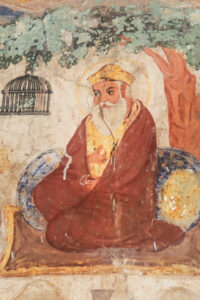 The founder of Sikhism, even as a young boy Nanak (also spelled Nanek) spurned most of the religious dogma and caste divisions that plagued India at a time of intense social, cultural, and political conflict (particularly between Hinduism and Islam). Nanak’s teachings transcended those divisions and spoke of a universal vision of unity, compassion, service, and direct experience of the divine. Following a profound spiritual experience in his 20s, Nanak began to travel across India and the Middle East spreading a gospel of unity and oneness.
Core tenets of his teachings included:
Oneness of God
His most notable teaching, Nanak’s central teaching was Ik Onkar, meaning One Reality. He taught that God is beyond form, gender, name, etc., and was immanent in all things. This teaching of course aligns perfectly with other perennial wisdom teachings, including Vedanta, Sufism, and Christian mysticism.
Even Kings and emperors with heaps of wealth and vast dominion cannot compare with an ant filled with the love of God.
Direct Experience
Also as with other wisdom teachers, Nanak rejected the blind rituals, dogma, and caste divisions he saw plaguing traditional religions. Instead he urged his followers to seek direct communion with God, which he saw as their birthright and responsibility.
Equality and Compassion
Nanak took pains to point out that all humans – male and female, rich and poor, Hind or Muslim – were of the same God and as such were entitled to the same compassion and love. He urged his followers to serve their fellow men regardless of background and to earn an honest living.
Inner Stillness and Divine Remembrance
Similar to Christian mysticism’s call to keep God at the forefront of all thought, Nanak urged his followers to practice Naam Simran, which is to meditate on the divine name of God. Through this practice comes the dissolution of ego and realization of Oneness.
Egolessness
Nanak maintained that the root of human suffering lay in haumai, or the egoic sense of I, me, mine. Liberation, he said, came from humility, service to others, and surrendering to the divine will (hukam).
There are a number of books that offer strong insights into Nanak and his teachings, most notably: The First Sikh Spiritual Master: Timeless Wisdom from the Life and Techniques of Guru Nanak and Walking With Nanak.
Much like Eva Werber, little is known about Ruby Nelson, a mystic and spiritual teacher of the era’s New Thought movement. While Nelson never achieved the notoriety of comparable voices, including Emmet Fox, Charles Fillmore, or Florence Scovel Shinn, her writings and teachings strongly align with the same principle undergirding the perennial wisdom: namely, the existence of a consistent, timeless spiritual truth at the heart of all great spiritual, mystical, and religious traditions.
“Effort belongs to the personal sense; realization belongs to God.”
In a sense, the obscure, quiet work of individuals like Nelson speak to the authenticity of their authors. There is no need here for fame or fortune, no demand for attention nor promotion of the message (‘Let he who has ears, hear’). Instead, she spoke and wrote of the importance of a direct experience of God through inner transformation versus dogma, ritual, and external authority.
Core tenets of Nelson’s teachings include:
God as Immanent Presence
As with other perennial teachers, Nelson spoke of a God that is not distant or external to us but is, instead, immediately present. God, per Nelson, represents the life, the intelligence, the awareness found in each individual.
From Ego-Self to Divine Self
Also similar to Werber, Nelson stated that human suffering stems from our mistaken belief in being something separate and apart from the One rather than an expression of that One. This sense of separation leads to suffering, clinging, and fear of death.
Transformation Through Inner Alignment
Along those same lines, this sense of separation can only end not through the moralistic behaviors and ideas promoted in religion, but instead through a direct experience with divine Truth (‘the Truth shall set you free’). As with other perennial teachers, Nelson maintained that love, morality, etc., were natural offshoots of this inner alignment with the Truth. Any other form of morality was conditional and forced. In other words, we don’t try to be goo or to love, we remember these as our natural aspects of our true being.
Faith as Inner Trust, Not Belief
To Nelson, true faith in God and Truth originated from within rather than the admonishments of a religion. We surrender to and rest in the understanding that God expresses itself through us, we need only let go and let God.
Nelson’s teachings are beautifully articulated in her small book, The Door of Everything.
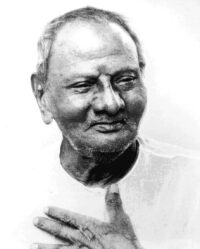 Nisargadatta Maharaj was an Indian spiritual teacher and one of the most well-known modern exponents of Advaita Vedānta (nondualism). A Mumbai resident, he led a simple life as a shopkeeper and became widely known after the publication of his talks in I Am That: Talks with Sri Nisargadatta Maharaj, a book widely considered the cornerstone of 20th-century nondual teachings. Famously direct and unsentimental, Nisargadatta did not hesitate to challenge the students who assembled in his small flat and even evict those who were not serious in their pursuits.
Core tenets of Nisargadatta’s teachings include:
I Am
Again and again he urged his students to focus on that timeless sense of I Am that existed within them prior to and after thoughts arose. He said it was in that awareness of I Am that the true Self – God – existed.
Wisdom is knowing I am nothing. Love is knowing I am everything. Between the two my life moves.
No Body, No Mind
Nisargadatta maintained that we are neither the body nor the mind – that the true nature of every human is timeless, formless consciousness untouched by personal history or circumstance.
Nonduality
Nisargadatta told his student the sense of separation between them and the outside world was an illusion and the cause of all suffering. Only the Self, pure awareness is real and infinite.
Liberation is Here and Now
As with other teachings of the perennial wisdom, Nisargadatta said liberation or enlightenment is not something to be attained at some future time or place. Instead, it is a recognition of what already is, always has been, and always will be.
Nisargadatta Maharaj’s most famous books and a must-read for anyone interested in Advaita Vedanta and the perennial wisdom is I Am That: Talks with Sri Nisargadatta Maharaj,
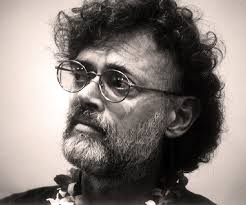 An ethnobotanist, writer, and visionary thinker, McKenna was best known for his deep explorations into consciousness, psychedelics, human evolution, aboriginal anthropology, and language.
“Psychedelics are to the study of consciousness what the telescope was to astronomy.”
Key tenets of McKenna’s teachings included:
Entheogens as Pathways to the Divine
McKenna believed entheogens, such as psilocybin mushrooms, DMT, ayahuasca, and ibogaine could unlock deeper structures of consciousness through the dissolution of ego. These ideas aligned closed with mystical insights found in the perennial wisdom teachings, which hold that ultimate truth, God, One, Source, etc., could only be found through direct experience rather than religious dogma and New Age jargon.
-
This aligns closely with the mystical insight at the heart of perennial wisdom: that ultimate truth is not found through belief, but through direct experience of unity—what mystics call God, Brahman, or the One.
-
He often said, “Psychedelics are to the study of consciousness what the telescope was to astronomy.”
In this way, McKenna’s work echoes figures like Meister Eckhart, Rumi, and the Zen masters, who all spoke of an ineffable, direct knowing beyond words or dogma.
Unity of Mind, Spirit and Nature
McKenna’s cosmology rejected the materialist worldview. He proposed that mind and nature are not separate, but expressions of one evolving field of intelligence. Again, this jibes with the non-dual teachings found in Advaita Vedanta, Taoism, Meister Eckhart, and others.
Language, Myth, Logos
McKenna was fascinated by the idea that language itself is a divine force—the “logos” that brings reality into being. This ties in nicely with Hermetic and Christian mystical beliefs in Logos acting as a bridge between God and Its creation (aka, “In the beginning was the Word”).
Rousing the Modern Mind
McKenna was deeply critical of the Western world’s (now a global phenomenon) wholesale embrace of materialism. In his books and talks McKenna urged his audiences to transcend the material to rediscover the living divinity connecting them and the universe.
His best-known works were:
The Invisible Landscape: Mind, Hallucinogens, and the I Ching
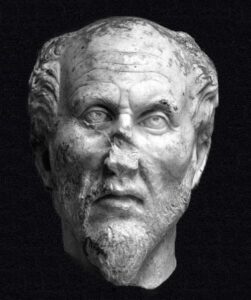 The principal founder of Neoplatonism, one of the most influential spiritual-philosophical systems of late antiquity, Plotinus (204–270 CE) saw reality as an emanation of an ultimate, ineffable Source – the One.
His ideas helped to shape early Christian mysticism, Islamic philosophy, Jewish Kabbalah, and Renaissance Platonism. It could be argued, in fact, that he was a cornerstone thinker behind the perennial wisdom.
“We are not separated from spirit, we are in it.”
Key tenets of his teachings include:
The One
Plotinus declared the One as beyond being, thought, and language. The One is utterly simple, infinite, and the source of all that exists. It cannot be grasped conceptually; it is known only through direct realization.
Emanation (Not Creation)
Plotinus said reality unfolds as a kind of outpouring from the One: The One → Nous (Divine Intellect) → Soul (World Soul & individual souls) → Material world. Far from the church’s fall from grace of original sin, this is an expression of unity in oneness.
The Return (Reversion)
Plotinus saw the soul’s task not as one of belief but rather inner return to the One. We must turn away from (or see through) the multiplicity expressed in appearance and back toward unity or oneness. This he saw achieved through ethical purification, contemplation, and interior silence.
Union Beyond Thought
In its ultimate expression, the soul realizes identity with the One in ecstatic union (henosis). Plotinus himself is said to have entered this state several times.
Although Plotinus never wrote for publication, his student Porphyry compiled his teachings into The Enneads (groups of nine). These texts read less like philosophy and more like mystical instruction manuals, guiding the reader from conceptual understanding toward lived realization.
As with the many perennial wisdom teachers who came later, Plotinus shared many of the same beliefs / teachings, including:
- Ultimate Reality is ineffable
- Knowledge is transformation, not information
- The divine is immanent, not distant
- Ascent through interior purification
- Mystical union is universal
A Bengali Hindu mystic and priest of the Kali temple at Dakshineswar near Calcutta, Ramakrishna (1836–1886) is considered one of the perennial tradition’s most important figures due to his intense internal calling and profound mystical experiences. In fact, it’s safe to say Ramakrishna’s life became a living demonstration of what is often called the perennial wisdom: the idea that all authentic spiritual traditions point to the same ultimate Reality.
Beginning at a very young age, Ramakrishna displayed intense devotional moods, spontaneous trances, an unusual sensitivity to the sacred, and all-consuming mystical experiences. His description of one such occasion: “When I was ten or eleven years old … I was passing through a paddy-field, I saw something and was overwhelmed. There are certain characteristics of God-vision. One sees light, feels joy, and experiences the upsurge of a great current in one’s chest, like the bursting of a rocket.” This aligns with similar descriptions shared by Robert Adams, Ramana Maharshi, and David Carse.
“I have practiced all religions – Hinduism, Islam, Christianity – and I have also followed the paths of the different Hindu sects… I have found that it is the same God toward whom all are directing their steps.”
Later, as a young priest, Ramakrishna became obsessed with the idea of knowing God directly – not just believing in God, but seeing, knowing, and merging with the Divine Source. Ultimately he is said to have achieved this permanent state of samadhi or union. What makes Ramakrishna particularly unique is his use of all major religious movements to achieve the same destination, including: Kali bhakti (devotion to the Divine Mother), Advaita Vedanta (nondual realization), Tantric disciplines, Vaishnavism, Islam (Sufism), and Christian mysticism.
This is why for many, Ramakrishna is best known for demonstrating the idea that many paths all leads to the same God / Truth / Reality.
Key tenets of Ramakrishna’s teachings include:
Unity of All Religions
Far from simply believing all authentic religions are true, Ramakrishna tested them experientially. Islamic prayer and dress → reported merging with Allah; Christian contemplation → saw Christ merge into him; Hindu paths → attained samadhi repeatedly
Direct Experience Over Doctrine
Ramakrishna was famously uninterested in theology, metaphysics, or abstract debate. He would often say: “What is the use of merely repeating the name of sugar? One must taste it to know its sweetness.”
Ego-Transcendence
As with other perennial wisdom teachers, Ramakrishna taught that the ego – the false sense of a separate I – is the main barrier to God-realization. He likened the ego to a cloud hiding the sun. He distinguished phases of the ego as:
- The ripe ego (humble, surrendered)
- The unripe ego (proud, self-centered)
God with Form and Without Form
One of Ramakrishna’s most important contributions to the perennial way is in his reconciliation between a personal God and the Impersonal Absolute. Both, he said, are true. “God is with form, and God is formless too. And He is beyond both form and formlessness.”
Spiritual Temperament Matters
As noted above, Ramakrishna recognized that human egos, personalities, and temperaments come in many different flavors. As such, he recommended different paths to the same destination:
- Devotion (bhakti)
- Knowledge / Gnosis (jnana)
- Meditation (raja yoga)
- Service (karma yoga)
The best way to discover his teachings: The Gospel of Sri Ramakrishna.
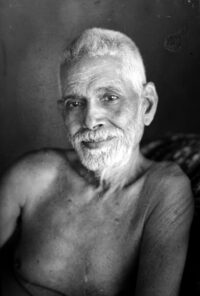 Considered one of the most influential figures in modern Advaita Vedanta, Ramana was an Indian sage who is often regarded as a living embodiment of the perennial philosophy—the universal wisdom underlying all spiritual traditions. Also sometimes known as the quiet sage, Ramana believed the most meaningful teaching was delivered in silence.
At age 16 and believing he was on the cusp of death, Ramana surrendered to the moment and, in a sense, DID die as his ego fell away to reveal the divine. In that moment, he realized that while the body may die, the Self—pure consciousness or Being—is eternal and deathless. From there he moved on to the sacred mountain, Arunachala, where he lived for the rest of his life as a renunciate and teacher.
Core tenets of Ramana’s teachings include:
Self is God
As with other perennial wisdom teachers, Ramana taught that there is only One reality – pure, effortless, formless consciousness, known in sanskrit as sat-chit-ananda or being-consciousness-bliss. Other labels for this are God, Self, the Absolute.
Your own Self-Realization is the greatest service you can render the world.
Self-Inquiry
Ramana maintained that the most direct path to self-awareness was made through self-inquiry (ātma-vichāra). By repeatedly and steadfastly inquiring into one’s own nature – Who Am I? – the seeker interrupts the mind’s usual cacophony of thoughts. When thoughts do intrude, Ramana encouraged seekers to ignore the contents of the thoughts and instead ask, ‘To whom do these thoughts arise?’ By seeking this I-source the mind grows quiet and eventually is absorbed into the metaphorical heart center where the true Self resides.
Silence
Visitors from around the world were often shocked to discover how little Ramana actually spoke during their visits. But even his most ardent skeptics said that his gaze opened something in them that could never again be closed. Ramana said silence was the highest teaching and that words usually only got in the way of Truth.
Oneness
In the truest sense of Advaita Vedanta (nonduality), Ramana said there was no separation between the individual and the outside world. All was One. The outside world, he said, was illusory appearance and one must transcend that world to recognize Truth.
There are many books on Ramana Maharshi and his teachings, most notably: Be As You Are: The Teachings of Sri Ramana Maharshi, Who Am I?, and The Collected Works of Ramana Maharshi.
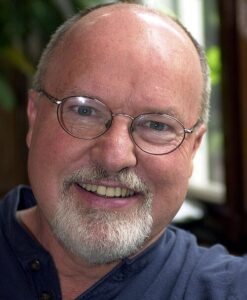
Photo Stephanie Grell
A Franciscan friar, Catholic priest, and one of today’s most influential contemporary teachers of Christian contemplative spirituality, Richard Rohr (b. 1943) is the founder of the Center for Action and Contemplation (CAC) in Albuquerque, New Mexico, which integrates mysticism, social justice, psychology, and nondual awareness.
Rohr is best known for translating ancient mystical insights – especially from Christianity – into language accessible to modern seekers, including those disenchanted with the dogma, rites, and rituals of conventional religious teachings. He’s also well-known for bridging psychology, trauma, and spirituality in ways that resonate with early students. He also is open-minded to the idea of a faith that is compatible with science and gives his readers and listeners permission to let go of childish images of God (what Joel Goldsmith would call ‘Santa Claus in the sky’).
“Nonduality is not saying there are no differences; it’s saying that differences don’t divide.”
Akin to other perennial wisdom teachers, Rohr’s work is guided by the conviction that all authentic spiritual traditions point to the same deep reality, even if they use different symbols, myths, and metaphors. Key contributions to the perennial way include:
Nonduality: Reality As Whole
In the same way that the perennial wisdom emphasizes that subject and object, sacred and secular, self and other are not ultimately separate, Rohr consistently teaches that God is not an object out there separate and apart from the whole; that true knowing is participatory vs conceptual; and that love replaces judgment when duality falls away.
The Cosmic Christ
Rohr humorously and repeatedly emphasizes that ‘Christ’ is not Jesus’s last name but, instead, represents the cosmic, eternal Logos present in all creation.
Transformation Over Moral Perfection
In the same way that other perennial teachings prioritizes direct experience and inner transformation over external compliance, Rohr distinguishes between ego-driven morality (rules, judgment, ego defense) with transformed consciousness (a natural outpouring of love). Similar to John of the Cross, Rohr counsels that authentic spiritual growth requires that we die daily and, ideally, before physical death and that grace precedes effort.
Initiation, Suffering, and the Dark Night
Rohr teaches that awakening is not achieved through cognition, thinking, ideas and words but, instead, through necessary suffering, the loss of attachments and material certainties, and ego humiliation (e.g., the progressive loss of the ego’s belief that it is in control, superior, or otherwise self-sufficient).
Action and Contemplation United
Rohr argues that contemplation without action leads to narcissism and action without contemplation leads to burnout or violence.
Key books by Rohr include: Breathing Under Water: Spirituality and the Twelve Steps, The Universal Christ: How a Forgotten Reality Can Change Everything We See, Hope For, and Believe, The Tears of Things: Prophetic Wisdom for an Age of Outrage, Falling Upward, Revised and Updated: A Spirituality for the Two Halves of Life, and Immortal Diamond.
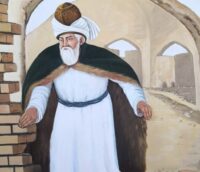 A Persian scholar, poet, and mystic, Jalāl al-Dīn Rūmī was a 13th-century Persian mystic, theologian, and poet whose teachings transcended religion, language, and culture. Rumi got his start as a respected Islamic scholar before undergoing a profound spiritual transformation after meeting the wandering mystic Shams of Tabriz. The encounter sparked a love-infused mystical realization that became central to both his poetry and philosophy.
Rumi is perhaps best known for his prodigious collection of poems that speak to the concepts of universal love, oneness, the importance of the mystical journey (seeking a return to God / Source), and the critical nature of the heart (versus the mind) as the path of transformation from ego to spirit / soul. Rumi wrote of love as the essence of all existence, tied humans suffering to our perceived separation from God, and associated human restlessness our desire to return to God. And in line with so many other perennial way teachers, Rumi maintained that the ego – and the outside world – were illusory veils that obscured the inherent oneness in all things.
Core tenets of Rumi’s teachings include:
Direct Experience
As with all perennial wisdom teachers, Rumi maintained that we must move beyond blind faith, belief, and dogma in order to directly experience the divinity within.
Unity of Being (Tawḥīd)
Rumi stated that all existence is an expression of the One divine reality; that separation from the One is nothing more than a dream; and that ultimately all will return to the Source eventually.
What you seek is seeking you.
Love as the Path to God
Divine love (ishq-e-haqīqī) is both the means and the end of the spiritual journey. Love dissolves the ego and reveals the Beloved within.
Inner Transformation
The false self or ego must be purified through the symbolism of burning, melting, or shattering so that the divine essence may shine through (in Christian mysticism this is tantamount to Paul’s admonition to ‘die daily’ until the sense of a separate self is extinguished).
Beyond Religion and Form
As with other perennial wisdom teachings, Rumi argued that all religions and spiritual movements point to the same thing. “The lamps are different, but the Light is the same.”
Silence and Stillness
Similar to Ramana Maharshi’s teachings, Rumi maintained that the deepest, truest knowing comes not from words or thoughts but from inner silence, where the heart recognizes its unity with the Divine.
There are many books on Rumi, but we recommend getting started with these: The Essential Rumi, I Love You Forever: An Exquisite Collection of the Loving Poems by Rumi: An Authentic Translation, and The Garden of Rumi’s Poetry: A Collection of the Best Poems of Rumi (Poetry Collections by Rumi, Hafiz, and Other Persian Poets).
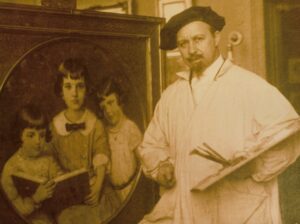 An American artist, philosopher, architect, musician, and metaphysical cosmologist, Walter Russell (1871–1963) is a somewhat unorthodox inclusion here but merited due to his claims of receiving a series of radical mystical revelations that prompted him to attempt to stitch together a unified worldview based on a single cosmic principle.
Although controversial in some scientific circles, Russell’s work has endured in the worlds of spiritual philosophy, New Thought, nondual metaphysics and, perhaps most important, and modern explorations consciousness-based cosmology. Most of Russell’s ideas align closely with perennial wisdom teachings, including the idea that all of what we call Reality is fundamentally One, intelligent, ordered, and self-aware.
The universe is God remembering Himself through rhythmic light—and man is the point of awakening.
In 1921, Russell repeatedly entered states of profound altered consciousness during which he claimed to experience ‘cosmic illumination.’ It was during these revelations that the entire structure of the universe became known to him. Russell’s contributions to the perennial way include:
Unity Beyond Duality
As with all perennial wisdom teachers, Russell taught that, rather than being composed of opposing forces (good vs evil, matter vs spirit, life vs death), the universe is a divine force operating in rhythmic balance. That One divinity, said Russell, is Light.
The Universe as Thought Made Visible
A cornerstone of Russell’s philosophy is that matter is crystallized thought, meaning temporary forms created by the mind and sustained by rhythmic law. Although indirectly, such teachings speak to quantum physics’ discovery of wave functions only materializing into ‘material’ particles in the presence of consciousness. As with other perennial teachers, Russell argued that consciousness precedes energy and form, not the other way around.
God as Stillness, Not Force
Also akin to other perennial teachings, Russell maintained that God operates through stillness / silence, not force. Motion, he said, arises out of – and returns to – stillness. It is from this stillness, he said, that all creativity arises.
Rhythm, Cycles, and Breath of the Cosmos
One of Russell’s more eye-opening descriptions is of the universe as a ‘breathing organism’ endlessly expanding and contracting in rhythmic cycles. This same pattern, he said, can be found in the micro and macro of life, in quanta and atoms, in galaxies and stars, and in human life itself.
Man as a Co-Creator with God
Russell maintained that humankind’s highest purpose was to operate in conscious concert with God – to serve as instruments of vehicles through which God’s will could be done. He called this ‘conscious cooperation with divine law.’
Russell’s most notable words include: The Secret of Light, The Universal One, The Message of the Divine Iliad, and A New Concept of the Universe.
 An American spiritual teacher and mystic, William Samuel’s work bridged Eastern and Western wisdom traditions. Though not widely known in mainstream spiritual circles, his writings and recorded talks earned him a quiet following among seekers profoundly impacted by his teachings. During his service as a U.S. Army officer in both World War II and the Korean War, Samuel immersed himself in spiritual studies, meditation, and prayer. It was during a particularly intense battle in the Korean conflict that he underwent a profound awakening that he characterized as a spontaneous recognition of the “unchanging Peace behind all appearances.”
Core tenets of Samuel’s teachings included:
Awareness as God
Samuel taught that what we call awareness, consciousness, being or God are one and the same thing, representing the One ineffable divine being. As with all perennial wisdom teachers, he emphasized direct experience of this awareness of God over intellectual exercises. “Awareness,” he said, “is the Presence of God being aware.”
The very Identity you are, that which is listening is all the power in the world.
The Child Within
Perhaps his most distinctive metaphor, Samuel referred to the Child Within as the unconditioned, innocent Awareness prior to conceptual thought – the same essence Jesus referred to when he said, “Except ye become as little children, ye shall not enter the kingdom of heaven.” Jesus is said to have urged his followers to return to the state of childlike innocence. Far from psychological, this child is the timeless, ever-present Self through which the divine is known.
NonDuality
As with Advaita Vedānta and Taoism, Samuel pointed to the illusory nature of subject-object duality. He spoke of “the Absolute within which both light and shadow appear.” From Samuel’s perspective, both war and peace, life and death, are expressions of the one undivided Awareness.
Living Realization in the World
Samuel emphasized that realization is not withdrawal from the world but living in it with compassion and clarity. He saw life as a kind of living classroom for the development of self-awareness and self-realization.
The best books to get to know William Samuel and his teachings include: A Guide to Awareness and Tranquility, The Child Within Us Lives!, and The Awareness of Self-Discovery.
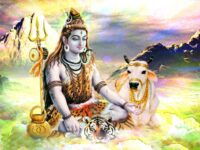 An 8th-century Indian philosopher and mystic, Adi Shankaracharya (aka Shankara) is credited with breathing new life into the ancient school of Advaita Vedānta, one of the major vedantic schools of Hindu philosophy. His teachings are among the clearest expressions of the perennial philosophy, most notably in the view that all genuine spiritual traditions point toward a single, universal truth about the nature of reality and consciousness.
Among Shankara’s core teachings are:
One Reality
Brahman or God is the infinite, formless, timeless mode of consciousness from which all existence is made manifest.
True Self
Atman is the true Self (not the small ‘s’ self or ego) that abides within every human. Atman is expressed in Christian mysticism in terms such as ‘I and the father are One’ and ‘Be still and know that I am God.’
When the Great Reality is not known the study of the scriptures is fruitless; when the Great Reality is known the study of the scriptures is also fruitless.
The Universe is Maya
The material universe is an illusory appearance masquerading as something real, separate, and apart from the One. Maya can be seen as a dream state, illusion, unreal, a projection of mind. When we fail to recognize this truth, we suffer.
Ignorance is Bondage
Human ignorance of the aforementioned truths are what keeps us in bondage to both body and mind.
Liberation
To recognize one’s true identify is to experience liberation, enlightenment, moksha. As with other perennial wisdom teachers, Shankara taught that moksha was not to be sought but rather to be recognized as the infinite state of being of which we are.
A great place to start in learning more about Shankara and his teachings is the book, Shankara’s Crest Jewel of Discrimination.
 A Spanish Carmelite nun, mystic, reformer, and Doctor of the Church, St. Teresa of Avila written works are considered by followers of Christian mysticism to be among the most profound reflections on contemplative prayer and union with God. Her books specifically focus on the journey of the soul toward divine union, offering an experiential guide to inner transformation that perfectly aligns with other teachings of the perennial wisdom.
A native of Avila, Spain, Teresa entered the Carmelite order in her twenties and eventually led a reform movement aimed at restoring the simplicity, poverty, and interior devotion to monastic life. Teresa experienced profound mystical states – visions, ecstasies, and a deep sense of divine indwelling – which she described not as stages of awakening to a reality already within the soul. Her spiritual path was one of radical honesty, humility, and surrender – qualities she considered essential to realizing oneness with God.
Among Teresa’s core teachings are:
The Inner Journey to God
As with other perennial wisdom teachers, Teresa taught that the divine is not found ‘out there’ but rather within one’s self. In her book, The Interior Castle, she painted a picture of the soul as a crystal castle with seven ‘mansions,’ each representing the successive degrees of inner awakening. She said this journey as a gradual abandonment of outside, material distractions and egoic attachments toward one’s innermost center were God resides.
The soul is like a castle made entirely of diamond or very clear crystal, in which there are many rooms, just as in Heaven there are many mansions.
Union Through Love
As with Julian of Norwich (see listing) and other mystics, Teresa recognized that love – not the mind – was the key to divine union. And similar to Joel Goldsmith (see listing), she maintained that prayer was not about words spoken AT God or techniques found in organized religion, but instead representative of a state of listening where one became aware of God’s presence within.
Ego Death and Surrender
In line with David Carse (see listing), Teresa emphasized the importance of self-emptying (kenosis), humility, surrender, and the ultimate dissolution of the false self (ego). Only when the ego is transcended can the divine act on and through the individual.
God in All
Not unlike Meister Eckhart and Joel Goldsmith (see listings), Teresa maintained that one’s ultimate goal was a direct, non-mediated experience of God. She saw theology and organized religion as impediments to this union, since they require a subject (ego) and an object (scripture, church leaders, etc.) coming between the seeker and the God within. Her mystical union was not conceptual but experiential, aligning her with mystics of all traditions who have realized the same truth beyond dogma.
Teresa of Avila’s notable works are: The Interior Castle, The Way of Perfection, and The Book of Her Life.
 Also spelled Tayumanavar, Thayumanavar (1705–1742) was a Tamil mystic, poet, and saint from South India considered one of the greatest voices of spiritual realization in Tamil literature. Revered in both the Shaiva Siddhanta and Advaita Vedanta traditions, his verses are often ecstatic, deeply introspective, and poetically refined and they speak to nondual awareness, dissolution of the ego, and the importance of direct experience of divine unity.
God is the One who determines what we should do. We are mere agents or tools to carry out the Divine Will.
Core aspects of his teachings that align closely with the perennial wisdom include:
Mouna (Inner Silence) as the Supreme Practice
Thayumanavar repeatedly praises mouna — not mere verbal silence but the deep, effortless stillness of mind in which the Self shines by itself. Much like his countryman and fellow sage, Ramana Maharshi, Thayumanavar believed that silence was ‘ the real kingdom of God.’
Oneness Beyond Dogma
As with other perennial wisdom teachers, Thayumanavar eschewed the rites, rituals, and dogmas of conventional religions for the direct experience of God. He insisted that Truth transcends all religious orders and that the divine cannot be contained by doctrine.
The Divine Within
Like the Upanishadic sages and the mystics of the perennial wisdom, Thayumanavar taught that the Self (Ātman) and the Supreme (Brahman or Shiva) are one and the same. Realization is not attained through external striving but through inner awareness.
Love and Grace
He spoke of divine love as both the path and the fruit of realization. The Divine, he said, is ever ready to reveal Itself once the ego’s illusions dissolve.
Integration of the World and Spirit
Though he renounced worldly status, Thayumanavar did not reject the world as illusion; rather, he saw it as the play of the Divine Consciousness, much as Advaita Vedanta and the Perennial Philosophy describe.
The verses of Thayumanavar can be found in the Tamil book, Sri Thayumanavar Padalkal.
 A contemporary spiritual teacher best known for his books, The Power of Now and A New Earth, on the cusp of 30 Eckhart Tolle underwent a spontaneous, mystical awakening after what he described as a lifetime of deep suffering and misery.
Describing a night of particularly intense suffering, Tolle explains that the thought, ‘I can’t live with myself any longer’ jolted him sufficiently to wonder how there could be an ‘I’ that could not live with its ‘self.’ In other words, how many Eckharts were there? Stunned, Tolle felt a presence that demanded, “Resist nothing!”
“The decision to make the present moment into your friend is the end of the ego.”
By morning, Tolle found his consciousness fundamentally changed, and he claimed to spend the following years sitting on park benches in a state of sublime bliss.
Key aspects of Tolle’s teachings include:
Primacy of Direct Experience
As with virtually all perennial wisdom teachings, Tolle maintains that only a direct experience of the divine is what matters. Words and recordings are, at best, pointers, but experience is the key. The Truth that sets on free “is not something you believe,” says Tolle, “it is something you are.” Tolle consistently urges his followers toward a sense of ‘felt presence.’
Ego as the Root of Suffering
Also in line with other perennial wisdom teachers is Tolle’s belief that the ego – the false self – is the source of all suffering, fear, craving and sense of suffering. Silence the ego and the truth Self shines through. Per Tolle, the ego is a story set in psychological time. Liberation occurs through dis-identification with the thinker. Pure awareness / consciousness is our natural state.
The Eternal Now
The mind’s obsession with the past and future and the thread of time that connects the two is the cornerstone to suffering. When we are fully present in the Now time collapses and reveals what has always exi
Stillness as the Doorway
Akin to perennial teachings referencing silence, stillness, and emptiness as portals to our True Nature, Tolle maintains that stillness is less a practice than a recognition of the deep background against which human experience appears.
Compassion as a Natural Outcome
Tolle echoes other perennial teachers when he notes that compassion arises naturally from awakening, not through moral effort. True love, compassion, bliss are our natural state, veiled by the ego’s insistence on its own ideas of life and self.
In addition to The Power of Now and A New Earth Tolle also is the author of Oneness With All Life.
 A Hindu monk, philosopher, and one of the most influential spiritual teachers of the modern era, Swami Vivekananda (1863–1902) was a direct disciple of the mystic Ramakrishna and is best known for introducing Vedanta and Yoga to the West through his landmark speech at the 1893 Parliament of the World’s Religions in Chicago.
Vivekananda played a pivotal role in articulating what we now often call the perennial wisdom: the idea that all authentic spiritual traditions point to the same ultimate Reality, though they use different symbols, languages, and practices.
As with Ramana Maharshi, Robert Adams, and other perennial teachers, Vivekananda’s work was deeply rooted in India’s non-dual tradition of Advaita Vedanta.
Key tenets of Vivekananda’s teaching include:
Divinity of the Soul
At the core of Vivekananda’s work with the idea that the true identity of the human being is spirit (divinity), not ego or personality. The Real is infinite, timeless, and universal. “Each soul is potentially divine,” wrote Vivekananda. “The goal is to manifest this Divinity within.”
Unity of All Religions
One of the many reasons Vivekananda’s teachings align so perfectly with the perennial wisdom is his insistence that at the root of all authentic religions and spiritual movements is the same ineffable Truth: that there are many paths leading to one God. “Truth is one; sages call it various names.” Religious exclusivism (aka ‘my path is the only true path’), he said, is ego masquerading as belief.
Direct Realization Over Belief
As with all perennial wisdom teachers, Vivekananda insisted that God, divinity, One, Truth, etc., must be experienced, not merely believed. “Religion,” he said, “is not in doctrines, in dogmas, nor in intellectual argumentation; it is being and becoming.”
Four Yogas: A Universal Spiritual Map
Where Vivekananda differed with some perennial teachers, was in his systematized spiritual practice separated into four major paths illustrating that different egoic temperaments require different approaches:
- Jnana Yoga – Wisdom: Gnosis, insight, contemplation
- Bhakti Yoga – Devotion: Love, mysticism, surrender
- Karma Yoga – Service: Selfless action
- Raja Yoga – Meditation: Inner stillness, union
The approaches were different but their goal the same: union with the Absolute.
The Ego as the Great Illusion
Like the Buddha and many other perennial wisdom teachers, Vivekananda taught that suffering arises from identification with the limited, false self (ego) versus the true Self. “You are the infinite,” he would tell his students, “not this little body and mind.”
Spirituality and Social Action
Also differing from other mystics who retreated the from the world, Vivekananda emphasized the importance of service as worship. His founding of the Ramakrishna Mission embodied this. From Vivekananda’s perspective, enlightenment is not escape – it is embodied love.
Key works by Vivekananda including: The Complete Works Of Swami Vivekananda and Raja Yoga or Conquering the Internal Nature.
 A British philosopher, writer, and speaker, Alan Watts was perhaps best known for translating and popularizing Eastern spiritual ideas for Western audiences at a time when various counter-cultural movements were taking root both in the U.S. and across the developed world. A thoughtful, eloquent, dazzlingly talented extemporaneous speaker, Watts played a major role in bringing the principles of Zen Buddhism, Taoism, and Vedanta into mainstream Western thought. Watts’s contributions of perennial teachings were many, including:
Bridging East and West
In an era when mainstream religions still dominated the West, Watts was one of the first to intro and make understandable the fundamental philosophies and spiritual traditions of the East (Orient), particularly Zen Buddhism, Taoism, Hindu’s Vedanta practices, and Christian mysticism.
The meaning of life is just to be alive. It is so plain and so obvious and so simple. And yet, everybody rushes around in a great panic as if it were necessary to achieve something beyond themselves.
Reframing the Self
In true Eastern tradition, Watts sought to tear down Western ideas of a separate, isolated self (ego) and replace it with the idea we are complete expressions of the One, infinite Being – waves of the ocean of existence. As with other wisdom teachers, Watts believed the path to self-knowledge was also the path to Self knowledge (e.g., divine realization).
A Western Approach
Perhaps his greatest contribution was in using Western thought, language, and cultural touchstones to introduce Eastern mysticism and spiritual traditions to Western audiences. Using humor, metaphor, and direct speech, Watts was able to synthesize complex mystical concepts into ideas and trains of thought American and European audiences could easily follow.
Encouraging Direct Experience
As with other perennial wisdom teachers, Watts counseled direct, experiential knowledge (gnosis) versus the blind (hopeful, guilt-ridden) belief systems and dogma choking the living truth out of traditional Western religions. Like so many wisdom teachers, Watts urged his listeners to make the effort to wake up to their own truth.
Connecting Science and Spirit
Watts recognized that Western science had a role to play in spiritual teachings, particularly as modern physics increasingly revealed the unassailable truth that all of existence was One masquerading as many.
Watts gave countless talks and penned a number of books, most notably Out of Your Mind, The Book, The Wisdom of Insecurity and The Way of Zen.
Although little is known about her, Eva B. Werber (1888 – 1962) wrote with the steady hand of a resolutely clear mystic and spiritual teacher, her words articulating themes wholly familiar to perennial way students. No separation, ultimate reality as One, consciousness / God the only Source, and most important, liberation stemming from direct experience versus belief, dogma, or religious ritual are all to be found in Werber’s writings.
Although she never became widely famous, readers of Werber’s books will instantly recognize themes found in Advaita Vedanta, Zen, and Sufi teachings. A familiar voice in the era’s New Thought movement, Werber’s works breathed a new and familiar light into perennial teachings.
“The self you defend is not the self you are.”
Key tenets of Werber’s writings and contributions to the perennial way include:
Werber’s contribution is best understood not as a new doctrine, but as a lucid restatement of perennial truths in modern psychological language.
Direct Knowledge
As with most perennial wisdom teachers, at the core of Werber’s teaching was the insistence that ultimate Truth can only be experienced directly, not known or learned intellectually. To Werber, the key obstacle to knowing God wasn’t sin but the misidentification with a false ego-self.
Ego as the False Center
Along those lines, Werber consistently described the ego as a mental construct mistakenly assumed to be a viable self, separate and apart from the world around it. This belief leads to suffering and a never-ending pursuit of material things and pleasures.
Stillness and Interior Silence
Like other perennial wisdom teachers, Werber stressed the importance of inner stillness and quiet where the still small voice within might at last make its way to the surface and be known. Instead of effortful meditation, she urged her readers and listeners to rest in awareness, reasoning that it is only in that silence that their omnipresent consciousness is revealed.
Non-Duality Expressed Simply
Unusual for her day, Werber gave voice to the nonduality that lies at the heart of metaphysics. Werber directly pointed at the idea of awareness knowing itself, of life living itself, and of love naturally rising to the fore as the sense of separation dissolves.
Modern Psychological Clarity
A lifelong student of art, Werber avoided the theological connections made by other perennial teachers, choosing instead modern language that would be more accessible to the era’s seekers. Concepts such as identity (ego) vs awareness, mental conditioning vs presence, and psychological resistance at the veil obscuring ultimate Truth were common in her writings.
Key works by Eva Werber include: Voice of the Master, Quiet Talks with the Master, and Journey with the Master.
 The pen name of Terence James Stannus Gray, Wei Wu Wei was an Anglo-Irish mystic, writer, and philosopher whose works explored the nature of reality, the illusion of the ego, and the direct experience of nonduality. Similar to Alan Watts (see his listing), Wei Wu Wei’s writings were considered important influences in helping Western audiences better understand the principles behind Advaita Vedanta, Zen Buddhism, and the Perennial Philosophy.
He traveled extensively in Asia, studying Buddhism and Taoism, and was particularly influenced by Ramana Maharshi, the Chan (Zen)masters, and the Taoist principle of non-action (wu wei), from which his pen name derives.
Key tenets of Wei Wu Wei’s teachings include:
No Me
At the heart of all Wei Wu Wei writings is the idea that there is no independent, separate self. What every human holds to be ‘me’ is, in fact, merely a manifestation of the one true Self or God.
As long as there is a ‘you’ doing or not-doing, thinking or not-thinking, meditating or not-meditating, you are no closer to home than the day you were born.
I Am That
This absolute, One is what each of us already is. We cannot be anything other than That. As such, there is no enlightenment or liberation to be attained but instead only to be recognized (or remember, aka re-cognized).
The World is Mind
The temporal, phenomenal, dualistic universe and all that it holds is a projection of the mind. There is no observer apart from the observed. Or looked at another way, the seer, the seeing, and that which is seen are all one and the same thing.
Non-Doing
The authentic spiritual life is less about effort or doing good than in ceasing to identify with the one seemingly doing these things. Only when this is recognized can the True Self spontaneously shine forth.
Wei Wu Wei wrote a number of books, the most notable being Open Secret, Ask the Awakened, All Else Is Bondage, and Fingers Pointing Towards the Moon.
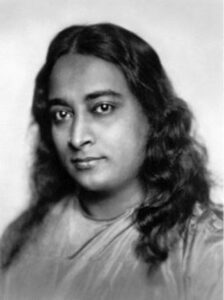 An Indian yogi, mystic, and spiritual teacher, Paramahansa Yogananda (1893–1952) is widely considered one of the earliest, most important, and popular teachers of yoga and meditation in the U.S. He is best known both for founding the Self-Realization Fellowship (SRF) and for his spiritual classic, Autobiography of a Yogi, which is considered one of the most influential spiritual books of the 20th century.
What sets Yogananda apart from other perennial teachers isn’t so much the content of his work as the era in which he introduced it to Western audiences (the 1920s, when concepts like yoga, meditation, and Eastern mysticism were at best seen as exotic).
His autobiography netted him a massive audience (millions of copies have been sold) and even secured him a meeting with President Coolidge. Numerous celebrities counted the book among their favorites, including Elvis Presley (who routinely gave copies of the book to friends and family). Apple’s founder, Steve Jobs, ensured that every person attending his funeral received a copy.
“Read a little. Meditate more. Think of God all the time.”
Key tenets of Yogananda’s teachings include:
Direct experience of the Divine
As with other perennial way teachers, Yogananda maintained that spiritual realization is achieved through disciplined practice, not belief, dogma, or moral striving. He stated that God is immanent in all human beings and that liberation is born of meditation, silence, and inner stillness.
Kriya Yoga
At the core of Yogananda’s practical teaching was Kriya Yoga, an ancient meditative discipline that combines action (Kriya) with yoga (union) to enhance spiritual awareness. Through breath work, focused attention, and subtle energy, practitioners could, in the words of Yogananda, decarbonize and recharge their blood oxygen levels thereby “creating a life force that reverses the normal course of decay.” (Notably, the mortician who signed off on Yogananda’s death attested that, weeks after his death his body “showed no signs of physical deterioration.”
Unity of Religions
Unusual for the time, Yogananda explicitly stated that all religions have, at their core, a unified basis later obscured by mind-made dogmas. In Yogananda’s estimation, the teachings of Jesus, Krishna, Buddha, and others were pointing to the same Truth. Christ consciousness, he said, represented a state of realization, not the workings of an individual person who lived 2,000 years ago. Similarly, he likened Jesus to an Eastern-style yogi and the gospels as comparable to works like the Bhagavad Gita.
The Inner Kingdom of God
Like all perennial way teachers, Yogananda maintained that God is within all beings. God is not a mental construct nor is It anywhere other than within. The soul awakens by turning inward toward its Source. Liberation occurs by stilling and ultimately overcoming the ego.
Ego Transcendence and Self-Realization
Yogananda consistently emphasized that the identification with a separate ego (body and mind) keeps its owner trapped in suffering. Freedom occurs when the ego is destroyed and with it that sense of separateness. Ultimately, Yogananda believed in – and offered his students access to – a path to inner awakening.
Key works by Yogananda include: the aforementioned Autobiography of a Yogi, The Spiritual Expression of Friendship, Scientific Healing Affirmations, The Second Coming of Christ: The Resurrection of the Christ Within You, Solving the Mystery of Life, and God Talks With Arjuna: The Bhagavad Gita.
Subscribe for Updates
Complete the form below and I’ll email you with updates.
Subscribe for Updates
Complete the form below and I’ll email you with updates.